
Or try one of the following: 詹姆斯.com, adult swim, Afterdawn, Ajaxian, Andy Budd, Ask a Ninja, AtomEnabled.org, BBC News, BBC Arabic, BBC China, BBC Russia, Brent Simmons, Channel Frederator, CNN, Digg, Diggnation, Flickr, Google News, Google Video, Harvard Law, Hebrew Language, InfoWorld, iTunes, Japanese Language, Korean Language, mir.aculo.us, Movie Trailers, Newspond, Nick Bradbury, OK/Cancel, OS News, Phil Ringnalda, Photoshop Videocast, reddit, Romanian Language, Russian Language, Ryan Parman, Traditional Chinese Language, Technorati, Tim Bray, TUAW, TVgasm, UNEASYsilence, Web 2.0 Show, Windows Vista Blog, XKCD, Yahoo! News, You Tube, Zeldman
yahoo.com/news Top Stories
yahoo.com/news Top StoriesUkraine strikes key Russian supply route just days before Trump-Putin talks 17 Nov 2026, 5:01 am
Ukraine has severely damaged a critical bridge linking Russia to occupied Crimea, in what Volodymyr Zelensky says was an "unprecedented operation" weeks in the making.
Images shared by Ukrainian officials show a section of the Crimean Bridge - also known as the Kerch Bridge - has collapsed into the water, dealing a logistical and symbolic blow to Russia's war effort.
The Kremlin said it would rebuild the bridge "better than before" and that Russian President Vladimir Putin had been briefed on the attack, though he is yet to comment.
Elsewhere, Kyiv Mayor Vitali Klitschko said the Northern and Southern bridges, both important crossings over the Dnipro River, were closed after Russia targeted the Ukrainian capital overnight.
Ukraine has long targeted the Crimean Bridge, which provides a road and rail route for Russian soldiers heading towards the front line, but has struggled to close it for good.
The damage reported on Tuesday appeared to be far more severe than previously, with a large arched section of the bridge apparently destroyed.
Video footage appeared to show critical damage to the road section, with remnants of the support arch and road deck seen protruding from the water below.

Zelensky said the overnight strike was the result of a seven-stage operation by the military and security services, which saw Ukrainian forces "gradually destroy air defence systems, radars, electronic warfare equipment, and other designated targets on the way to the final objective".
He said the rail section parallel to the bridge's road had also been hit by a wave of drones, though images showed its supporting arch was still standing and a Russian-backed official said some rail services were operating.
The Security Service of Ukraine said operations had "systematically suppressed enemy air defence systems" over a month, and said it showed "no Russian defence systems can guarantee the safety of illegal objects occupied by the invaders".
The bridge was built by Russia after it invaded and annexed the peninsula in 2014, and was personally opened by Putin in 2018.
While Ukraine has been trying to increase the cost to Russia of waging war economically, by hitting oil refineries and depots, striking the bridge is an attempt to increase the political cost on Putin.
The timing of the strike comes at a significant moment, ahead of Putin meeting the leaders of China and the US. This could cloud his moment back in the spotlight.
Kremlin spokesman Dmitry Peskov said the bridge would "be restored following Ukrainian strikes, and it will be even better than before", and did not rule out the possibility the strikes were linked to Putin's visit to China.
Russia's Investigative Committee confirmed structural damage and said it had opened a "criminal case... on terrorism charges" after attacks by "Ukraine's armed formations".
For the second day in a row, Russia recorded the biggest Ukrainian drone attack since the war began, with 2,256 drones downed, according to the defence ministry.

Zelensky had warned of major attacks in the days leading up to a meeting between Putin, Donald Trump and Xi Jinping in China's Shenzhen on Thursday.
Loud explosions were heard in Kyiv just before midnight on Tuesday, with Klitschko saying shortly after that the city had suffered "damage to critical infrastructure systems" and disruption to heating and water.
Some of Kyiv's above-ground subway services were damaged in the overnight attacks, officials said, after civilians were told to go to civil defence shelters.
Eight major bridges span the Dnipro River connecting the western and eastern parts of Kyiv, and an estimated three million residents rely on the bridges to travel across the city.
Strikes on the busy Northern and Southern Bridges will cause major disruption to people's daily lives.
Elsewhere, three people have been injured in a Russian missile attack in the Cherkasy region, according to local officials.

The long-term impact of the Crimean Bridge strike is still not fully clear though the risk of a serious transport and logistics crisis for the Russian military has increased significantly.
The collapse of the arched section of the Crimean Bridge has cut off the peninsula's direct road and rail links with Russia – at least until the crossing can be repaired.
However, there is still a land corridor running through the occupied parts of the Zaporizhzhia and Kherson regions - though Ukraine has been systematically striking transport routes across northern Crimea, as well as bridges and other crossings in the area around Chongar.
This has already caused problems with the delivery of fuel and other supplies, including military cargo.
There is a ferry crossing across the Kerch Strait. It could partly compensate for the loss of the bridge, but its capacity is very limited and it is also vulnerable to attack.
Russia could also supply Crimea by sea, but this route is also risky, as Ukrainian naval and aerial drones operate extensively in the area.
In addition, debris from the Crimean Bridge – particularly its enormous arch – may have blocked the shipping channel.
This would make it harder for larger vessels to pass through and create further problems for ports in the Sea of Azov, including Mariupol and Berdiansk.
Russia's launched its full-scale invasion of Ukraine in February 2022. Approximately one-fifth of Ukraine is now under Russian occupation and Kyiv has refused Putin's demand to give up areas of Ukraine's eastern Donbas that remain under its control.
- Landmark Crimea bridge hit as Russia reports biggest Ukrainian drone attack of war
- Ukraine says bodycam video shows deadly Russian double-tap bombing
- Zelensky welcomes US bringing Europe into Russia-Ukraine peace talks
FEMA will test a nationwide emergency alert on Tuesday. Your phone won't get it. 17 Nov 2026, 4:38 am
Be forewarned: Today, TVs and radios — not wireless phones — nationwide will blare a jolting emergency alert. But don't be alarmed; it's only a test. We repeat: It's only a test.
The Federal Emergency Management Agency (FEMA), along with the Federal Communications Commission (FCC), is running it to ensure the Emergency Alert System (EAS) for radio and television works during an actual emergency, such as a natural disaster, terrorist attack or other threat to public safety.
Wireless phones will not receive the test alert. "Wireless Emergency Alerts were tested in 2023, but they will not be part of this year's test," according to FEMA.
It comes amid online conspiracy theories that there will be a 90-day power outage starting Tuesday, which only intensified after last week's Microsoft global Outlook outage and the Federal Aviation Administration's rare ground stop. The federal government has not announced a nationwide 90-day blackout or plans to shut down the U.S. power grid. The rumors are centered around a Pentagon plan to ensure the military has access to critical energy, infrastructure and other resources in case of future disruptions.
FEMA quashed any rumors in an X post on Monday, saying, "We've heard a lot of rumors about tomorrow's EAS test. Let's clear things up. It lasts 1 minute, and no action is required. No blackouts, no secret emergencies."
We’ve heard a lot of rumors about tomorrow’s EAS test. 📺📻 Let’s clear things up. It lasts 1 minute, and no action is required. No blackouts, no secret emergencies. Just our legally mandated, routine test on TV and radio at approximately 2:20 PM ET: https://t.co/WGD7xCuRDB pic.twitter.com/HEErLQVKga
— FEMA (@fema) November 16, 2026
Here's what you can expect and what to know about the FEMA test today.
When will the alert test happen?
Here's when you can expect to be alerted depending on your time zone:
2:20 p.m. ET
1:20 p.m. CT
12:20 p.m. MT
11:20 a.m. PT
10:20 a.m. AT
9:20 a.m. HT
What will the test look and sound like?
Radio and television broadcasters nationwide will interrupt their programming with a message that generally says: "This is a nationwide test of the Emergency Alert System, issued by the Federal Emergency Management Agency. This is only a test. No action is required by the public."
According to FEMA, the Emergency Alert System involves thousands of independently operated radio, television, cable, satellite and wireline broadband providers. Since they use different equipment, the visual or audio formats may differ by station.
"The test will include alert tones to support accessibility for individuals who are deaf or hard of hearing," according to FEMA. And depending on the broadcaster and their capabilities, the message will be delivered in English, Spanish or both.
How long will the test last?
If your TV or radio is on and tuned to a broadcast station, cable system, satellite radio or television provider, or wireline video service, you should receive the test from the EAS, which is expected to take about one minute.
Why is the national emergency test happening?
Federal law requires FEMA to test the Integrated Public Alert and Warning System (IPAWS) at least once every three years. The last national test was conducted on Oct. 4, 2023.
"If an actual emergency or significant weather event occurs on test day, FEMA and the FCC may postpone the test," according to FEMA. "The backup date for the nationwide test is December 3, 2026."
This article originally appeared on Yahoo News at https://www.yahoo.com/news/us/article/fema-will-test-its-emergency-alert-system-tomorrow-heres-what-to-expect-210358652.html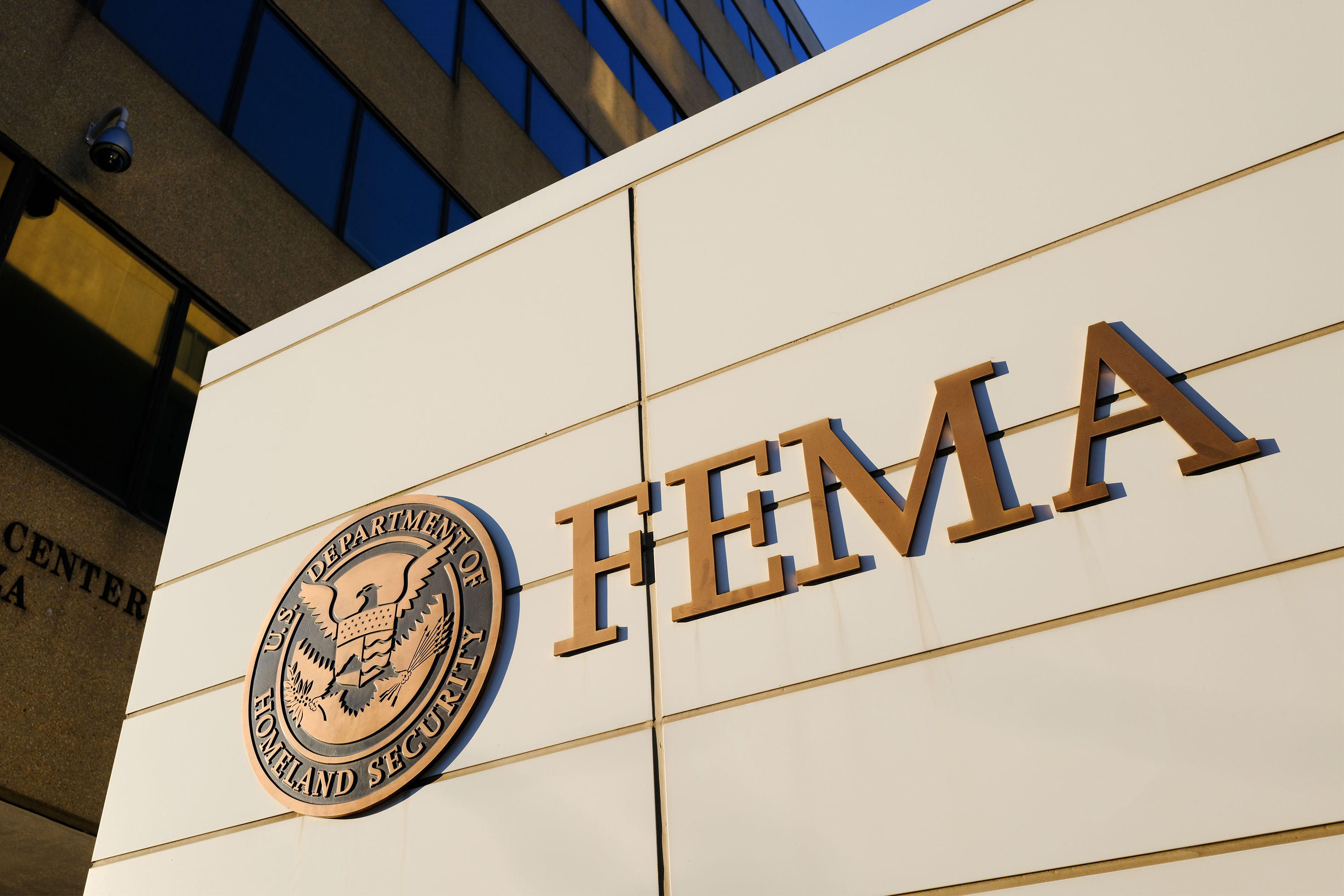
Protests flare in Philippines over Trump's visit and planned AI hub 17 Nov 2026, 3:25 am
Manila, Philippines — Protests against President Trump's visit to the Philippines have popped up around the country, as local residents criticize a Trump administration project to build an artificial intelligence and manufacturing hub just north of the country's capital of Manila.
In the opening salvo for Pax Silica, a U.S. State Department-led international initiative to secure non-Chinese supply chains for high-tech manufacturing, a more than 4,000-acre manufacturing hub is planned to be built in the Philippines.
Protesters in Manila on Monday held signs reading "Trump Out," drawings of him as a clown or a devil, and signs calling on the public to reject the Pax Silica initiative.
Critics argue the proposed industrial hub will displace farming communities and the Indigenous Aeta tribe, harm the country's water supply and represent U.S. imperialism over the Philippines.
"They have been grabbing our lands. They have been grabbing our economy. … Pax Silica is just for the U.S. It's not for us," said Maninging Vilog, a teacher and advocate for Aeta communities.
"If you look at the farmers, what do they care about AI? The people selling water … selling cigarettes, the people who drive buses. What do they care about AI?" said Kaiser Cortina, a 20-year-old protester.
Philippine President Ferdinand Marcos Jr., also a subject of the protests this week, supports the hub. He said in October he is "terribly excited" about the project's economic benefits, framing it as a "grand opportunity" for the country to move up the "value chain" by shifting into advanced manufacturing and research, according to PhilStar Global.
Marcos' administration has claimed the project could create 100,000 to 130,000 jobs.
A proposed 4,000-acre artificial intelligence hub north of Manila is drawing opposition ahead of President Trump’s visit to the Philippines.
The project is part of Pax Silica, a U.S.-led initiative aimed at reducing reliance on China for critical technology supply chains.… pic.twitter.com/9BQJFClqL8
— CBS News (@CBSNews) November 16, 2026Over 25 countries have signed on to the Pax Silica initiative since it was announced by the U.S. State Department in December 2025, including the United Kingdom, Israel, Japan and India. The Philippines joined the initiative in April, leading the U.S. and the Philippines to announce plans for a manufacturing hub.
A State Department spokesman said that the Philippines proposed the site of the hub, and that it is up to them to decide under its own laws and timetable, whether and how to proceed. They added that the U.S. remains committed to their set goal to create skilled manufacturing jobs in the Philippines and a more reliable supply chain for both countries.
The U.S. has raised concerns for years about supply chains for the hardware that powers AI, including worries that China could get access to advanced chips. The issue has drawn new attention in recent weeks, amid revelations that now-former Nvidia CEO Jensen Huang had an affair with a businesswoman and suspected Chinese intelligence asset whose company was under investigation for smuggling chips. (The company has denied chip smuggling.)
Pax Silica participants signed a declaration on Sunday that sets out a "common understanding of the sensitive technologies and critical infrastructure that underpin" artificial intelligence supply chains.
U.S. and Filipino officials have said there aren't expected to be any big announcements about Pax Silica this week during Mr. Trump's visit during the ASEAN summit in Manila. The U.S. president is expected to meet with Marcos on Wednesday before flying to China.
CBS News has reached out to the State Department for comment.
Antonio Tinio, a member of the Philippine House of Representatives, said there aren't any specific votes on Pax Silica planned in the country's legislature, and claimed "it's far from certain" that the Pax Silica hub will start construction and be successful.
And he added that the critiques of the Manila hub mirror the anti-AI data center sentiment in the U.S.
"The opposition to AI data centers is global. … That was one of the big issues in your election. It's a big issue. There's a lot of opposition throughout Southeast Asia, including Malaysia and Indonesia, and also in the Philippines," Tinio said.
This article originally appeared on CBS News at https://www.cbsnews.com/news/protests-philippines-trump-visit-ai-hub/JPMorgan Chase says it fixed software bug that disrupted transactions at major banks 17 Nov 2026, 3:14 am
Thousands of customers at major U.S. banks reported problems with their online accounts Monday after JPMorgan Chase said a software bug was affecting some transactions. The issue looked to have been fixed by late Monday.
The issue first emerged on Monday when Downdetector, a site that tracks user reports of outages for online services, showed that Chase, Bank of America, U.S. Bank, Wells Fargo, Capital One, Citi, TD Bank, USAA and American Express and others were spiking with user-reported issues.
In a statement posted to X, Chase said it was experiencing an issue linked to a software bug.
“JPMorganChase has experienced a temporary issue related to a software bug in on-premise hardware systems – there is no evidence this is cyber-related. It is taking longer than usual to service some customers,” it said.
Chase said customers still had access to their accounts and funds.
Users of money transfer service Zelle also reported issues. A spokesperson for Early Warning Services, which owns Zelle, told the Associated Press that the network was fully operational.
“Other banks may have been impacted by slowness in transactions only to the extent that they were a party to a transaction with us,” a spokesperson for Chase added.
JPMorgan said Monday evening that it had resolved the issue, Yahoo Finance confirmed. Reports of issues on Downdetector had significantly tailed off.
It was the latest major consumer service outage in recent days, following Microsoft Outlook downtime last week. That outage lasted more than 30 hours, with the company blaming a network upgrade for the problem.
On Friday, the Federal Aviation Administration had to institute a nationwide ground stop, causing thousands of flights to be delayed or canceled.
Transportation Secretary Sean Duffy said a team of experts from the FAA was inspecting a router that he said was the "likely cause" of the problem. He added that the ground stop was also connected to a server in Arkansas that "started to flood our network" while the FAA was in the process of upgrading its antiquated communications technology.
This article originally appeared on Yahoo Tech at https://tech.yahoo.com/general/breaking-news/article/bank-outages-reported-at-chase-bank-of-america-and-others-as-users-struggle-to-access-online-accounts-190713613.htmlNvidia creates new panel to address U.S. security concerns after Jensen Huang's exit 17 Nov 2026, 2:51 am
(Bloomberg) -- Nvidia Corp. has formed a new committee for its board to oversee national security policy and export control after the US moved to cut off China’s access to the company’s powerful artificial intelligence chips.
Most Read from Bloomberg
- ‘I’m a Piece of Sh--’: Jensen Huang’s Last Hours as Nvidia CEO
- Goldman Forecasts Gold to Take Two Years to Recapture All-Time Highs
- US Moves to Curb China’s Remote Access to Nvidia’s AI Chips
- Huang Discusses Comeback as Nvidia Chief With Allies, Report Says
- Quant Trader’s Singapore Profit Surge Mints Two Indian Billionaires
The committee will be headed by Suzanne Nora Johnson, a board member and former Goldman Sachs executive, and also include directors Stephen Neal and John Dabiri, Nvidia said in a statement Tuesday.
The new entity is one of the first major changes from interim Chief Executive Officer Colette Kress, who was appointed last week after the stunning resignation of Jensen Huang. The company founder stepped down after he admitted to an affair with a suspected Chinese spy, an episode that has brought increased political scrutiny on the key chip designer.
In the scandal’s fallout, the Trump administration moved to limit several countries from providing Chinese companies with remote access to Nvidia’s advanced AI chips. In an interim rule issued by the Commerce Department on Monday, data center operators in Singapore, Malaysia, Thailand, Indonesia and Brazil will need a license to obtain chips.
Nvidia’s AI accelerators are the leading equipment used to train and run AI models, making the company strategically important to the US and its push to dominate the emerging technology. Washington has spent the past few years tightening export controls over advanced semiconductors and chipmaking technologies to China. However, a loophole existed that allowed China to access computing power from AI data centers in other countries.
“We are committed to working constructively with government and industry partners to help establish and advance a robust framework that uses every tool at our disposal to safeguard national security while supporting continued technological innovation,” Nvidia Chairman Harvey Jones said in the statement.
The committee will oversee Nvidia’s push to enhance its internal National Security Team and Global Trade Compliance Team, and work with independent third-party experts in law, national security and global trade compliance, according to the statement.
Nvidia will report its results after the market closes Tuesday, but Wall Street is more focused on its long-term outlook following Huang’s ouster. Nvidia shares are down 16% since Nov. 8, when Huang revealed the affair.
(Updates with context about export controls starting in the fourth paragraph.)
Most Read from Bloomberg Businessweek
- A Week With Jensen Huang Just Before His Fall as Nvidia CEO
- Why This China Shock Looks Worse Than the Last
- The Theme Park Sweeping Europe With Brazenly Nationalistic Fun
- To Make in America, Start by Importing a Chinese Factory
- Why the Nvidia Scandal May Really Be a Trump Scandal
©2026 Bloomberg L.P.
This article originally appeared on Bloomberg at https://finance.yahoo.com/technology/ai/articles/nvidia-forms-export-control-board-105132905.html
Trump responds to Iran ‘dirty bomb’ report as White House says ‘no credible threats’ 16 Nov 2026, 8:55 pm
President Donald Trump has said Iran will “pay a price the likes of which no country has ever paid before” if there is any threat to Washington D.C., after U.S. intelligence found Iran could be developing plans to detonate a so-called dirty bomb or chemical weapon in the nation’s capital.
Speaking in Manilla on Tuesday, Trump said: “Well, if there is… they will pay a price the likes of which no country has ever paid before. I hope it’s not, but we take it very seriously, because they happen to be crazy. This is why they can’t have a nuclear weapon by the way.”
The White House told Newsweek there were currently “no credible threats” after a CNN report citing seven U.S. officials stated that new intelligence pointed to a potential effort to target senior Trump administration officials.
“We remain vigilant monitoring any and all potential threats, but at this time there are no credible threats to the homeland,” White House spokesperson Lauren Bis said in a statement to Newsweek on Monday.
Sources familiar with the intelligence characterized the planning as an effort to give Iran options, rather than an indication of an imminent attack. The report said officials remained divided over the credibility of the intelligence and whether Iran had the personnel in place to carry out such a plot.
Newsweek reached out to Iran’s Mission to the United Nations for comment. A spokesperson for the mission told CNN that Tehran considers the use of chemical weapons under any circumstances to be “wholly illegitimate and categorically rejects and unequivocally refutes the false and fabricated allegations circulated in this regard.”
Esmaeil Baqaei, a spokesman for Iran’s Ministry of Foreign Affairs, called the reports of the dirty bomb plot “baseless allegations.”
What Is A Dirty Bomb?
A dirty bomb is a conventional explosive device combined with radioactive material. The blast from such a device spreads dust, fragments and radioactive material into the surrounding area, which could leave its victims exposed to radiation through inhalation, ingestion, or direct contact.
It differs from a nuclear bomb because a regular explosive is used rather than creating a nuclear chain reaction. A dirty bomb could impact several city blocks, whereas a nuclear blast would vaporize much of a city.
A dirty bomb is easier to construct than a nuclear weapon because it does not require a sustained nuclear chain reaction or weapons-grade design. However, sufficient radioactive material would have to be obtained and delivered for it to be effective.
Why It Matters
The reported intelligence comes amid broader concerns of Iranian threats against senior U.S. officials. Newsweek reported last week that Treasury Secretary Scott Bessent had moved out of his Washington-area home and onto a military base following threats against his life from Iran.
Bessent’s relocation came as U.S. officials assessed that Iranian efforts to target current and former American officials had reached a more advanced stage.
He was the third Trump Cabinet member reported to have moved into military housing, following Secretary of State Marco Rubio and Defense Secretary Pete Hegseth. Reports have since indicated that Attorney General Todd Blanche has also been living at a military installation in the Washington D.C. area for months.
While speaking to reporters outside the White House on Monday, Trump was asked whether he was concerned about being targeted by Iranian drones. “I’m worried about you, because if they get me, you’re gone too. Be careful,” Trump said.
The president has sent mixed signals about the next steps in the war, at times threatening further military action against Iran while saying the conflict is “militarily…effectively over.”
Last week, he warned that U.S. forces were “locked and loaded,” and said Washington was monitoring Pickaxe Mountain, a facility linked to Iran’s nuclear program, for signs of activity.
Q: Are you worried about Iranian drones targeting you?
— Aaron Rupar (@atrupar) November 16, 2026
TRUMP: I'm worried about you, because if they get me, you're gone too. Be careful. pic.twitter.com/EWp6AOQs0K
CNN senior national security reporter Katie Bo Lillis said U.S. officials were reportedly taking the new intel “very, very seriously.”
“It sparked a real flurry of kind of planning efforts, of contingency planning efforts, here in Washington,” Lillis said Monday on the network.
Meanwhile, the U.S. is continuing to bolster its military presence in the Middle East as Trump weighs his next steps in the conflict.
A third American aircraft carrier, the USS Theodore Roosevelt, arrived in the region on Monday, U.S. Central Command said in a social media post. The carrier adds to the already substantial U.S. military buildup near Iran, joining the thousands of troops already deployed aboard the USS George H.W. Bush and USS George Washington.

The Strait of Hormuz remains a major flashpoint in the conflict, with commercial shipping continuing to face attacks and other risks. The waterway, through which roughly a fifth of the world’s oil passed before the war, has seen traffic fall to less than a third of prewar levels, according to independent maritime assessments. Iran’s Revolutionary Guard Corps navy said mines had damaged six oil tankers since Sunday.
The conflict has also contributed to higher costs for Americans, particularly at the gas pump, as disruptions to global oil supplies have pushed up energy prices.
Gas prices have since eased, falling below $4 per gallon for the first time since July, AAA reported Friday, but remain nearly a dollar higher than a year ago. The national average stood at $3.81 per gallon on Monday.
“These trends may continue, as the International Energy Agency has raised its oil production forecast, putting additional pressure on oil prices as shipments ramp up through the Strait of Hormuz,” Patrick De Haan, head of petroleum analysis at GasBuddy, said in a statement Monday.
“GasBuddy expects the national average price of gasoline to fall this week to its lowest level since March, dropping below $3.72 per gallon.”
Vice President JD Vance defended the administration’s handling of the Iran war in an interview with Fox News host Laura Ingraham on Monday. Vance said Trump could either end the military campaign or apply further military and diplomatic pressure on Iran, but insisted the president would not allow the conflict to become a prolonged commitment.
“We are not going to allow this to become a 10- or 15-year commitment, or, frankly, even a two-year commitment, despite the fact that a lot of neoconservatives and a lot of other people want us to stay there forever,” Vance said.
Newsweek’s reporters and editors used Martyn, our AI assistant, to produce this story. Learn more about Martyn here. Contact Newsweek editors on this story: Steven Frank, Edward T. Cummins and Emma Lee-Sang
Update 11/17/26, 7 a.m. ET: This article was updated with additional information.
This article originally appeared on NEWSWEEK at https://www.newsweek.com/white-house-says-no-credible-threat-after-iran-dirty-bomb-report-12725155
White House's $50 billion air traffic demand hits GOP turbulence in Senate 16 Nov 2026, 6:31 pm
Top Senate Republicans are all but ruling out immediate approval for the Trump administration’s plea for $50 billion to help overhaul the nation’s aging air traffic control system.
Majority Leader John Thune indicated Monday that he won’t seek to muscle the money through Congress using a Republican-only reconciliation bill — despite calls by President Donald Trump and Transportation Secretary Sean Duffy for quick action following last week’s hourslong ground stop due to a malfunction of critical aviation communication infrastructure.
Instead, Thune raised the prospect of negotiating the funding with Democrats, some of whom are expressing skepticism about the Trump administration’s modernization effort.
“We’re looking at what the needs are and doing that assessment, and then we’ll figure out what we can or are able to do and whether we can find bipartisan support to do something,” Thune told reporters at the Capitol. “That’s always key.”
He later said he would prefer to tackle the matter through the “normal” appropriations process, adding: “The question is: Are we going to partner with the Democrats?”
Democrats, though, don’t appear to be itching to rapidly OK the $50 billion — an amount that Duffy unveiled Friday hours after air travel came to a halt across the country. Days earlier, Duffy had said the administration was pushing for $30 billion.
In a speech on the Senate floor Monday, Minority Leader Chuck Schumer decried the Trump administration’s response to the ground stop, while adding that DOT had barely spent the $12.5 billion that Congress had provided in last year’s GOP megalaw.
“We want to give them all the money they need, but they’ve got to use it, and know how to implement it — and they don’t,” he said. Other Democrats on Monday offered similar remarks.
'I don't see the justification'
Even some Republicans expressed skepticism at the dollar amount.
“I don’t see the justification yet for that much,” Senate Appropriations Chair Susan Collins (R-Maine) said of the $50 billion, adding that she would need more detail on the request. She also noted that much of the $12.5 billion remains unspent.
Despite the rumblings from Capitol Hill, the Transportation Department continued to push for the money.
“The American people are in agreement that the country needs to invest in a Brand New Air Traffic System today,” DOT spokesperson Danna Almeida told POLITICO in a statement.
On Monday, Trump said he didn’t take any responsibility for the ground stop, blaming the Biden administration, while adding that the air traffic control system “had a heart attack.” On Sunday, he wrote on Truth Social: “We need Congress to give the money, FAST!” He added in another post that the overhaul “should be done all at once, not in drips and drabs.”
In an appearance on Fox News on Monday night, Vice President JD Vance reinforced that message: “This is not an expensive problem ... we need to reinvest and rebuild that infrastructure.”
Federal Aviation Administration chief Bryan Bedford and Duffy have said the failure was likely caused, in part, by a botched installation of a router at an air traffic control telecommunications facility, which government contractor L3Harris oversees.
Duffy will be on Capitol Hill on Tuesday to make his case to Republicans at a regular GOP weekly lunch. He spoke to Speaker Mike Johnson on Monday, said a person familiar with the conversation, who was granted anonymity to speak candidly.
The DOT chief was key in securing the $12.5 billion funding in last year’s Republican megalaw, which is aimed at modernizing the nation’s aging and stressed air traffic control system.
But Duffy has continued to push Congress for additional dollars, saying he needs more to finish the job.
Thune told reporters Monday that extra money is necessary but also noted that funding in the reconciliation law “hasn’t been used yet.”
According to FAA data shared with Congress and reviewed by POLITICO, the agency as of Oct. 31 has legally committed $4.3 billion — roughly 35% — of the 2025 Republican reconciliation law’s air traffic control money.
It has spent just over $1 billion, or about 9%, the data shows.
Seeking clarity
Other Republicans echoed Thune, saying that any funding should come out of the appropriations process, not via reconciliation. Whether that would be part of a year-end omnibus bill or stand-alone legislation wasn’t immediately clear. But it would mean Republicans could not push it through the Senate without Democratic cooperation, avoiding a filibuster.
Sen. Bernie Moreno (R-Ohio), a member of the Senate Commerce Committee, said he wasn't in favor of using reconciliation to pass the funding.
“This is an issue that affects all Americans,” he said Monday. “I do not wanna do it through reconciliation.”
Moreno also said he needed clarity on how DOT came up with the $50 billion figure. “What they need to do is give Congress one number that’s very, very thought out, that’s defendable, that’s accurate,” he said. “And then Congress should pass that immediately.”
Senate Armed Services Chair Roger Wicker (R-Miss.), when asked if he supports Duffy’s $50 billion request, said: “I think we need to get him some more money. It doesn’t need to come out of reconciliation.” Instead, he said, it should be from the appropriations process.
Republicans are already mulling Trump’s recent request for $350 billion in a reconciliation bill for the Defense Department.
Sen. Eric Schmitt (R-Mo.) introduced legislation in September to get Duffy around $30 billion, though a major chunk of that funding would be for airports.
DOT earlier this week touted that it has swapped out 70% of copper telecommunications lines across dozens of facilities for more modern technologies, among other accomplishments during the overhaul.
Similar to Schumer’s remarks, the Senate Appropriations Committee’s top Democrat, Sen. Patty Murray of Washington state, said Monday the administration hasn’t “spent the money that they’re sitting on” and she has received “no justification” for the ask. “I want to know where the money’s going to go [and] what they’re doing with the current allocation,” Murray said.
And Brian Schatz (D-Hawaii), an appropriator and the anticipated majority whip next Congress, said, “I generally support the idea of investing in air traffic control, but $50 billion sounds like an awfully round number.”
Jordain Carney, Chris Marquette, Mia McCarthy and Oriana Pawlyk contributed to this report.
This article originally appeared on Politico at https://www.politico.com/news/2026/11/16/trump-administration-air-traffic-demand-senate-01168724
FAA, Microsoft, banks: Why it feels like everything keeps breaking 16 Nov 2026, 2:45 pm
From grounded flights to frozen bank accounts, why does it seem like everything is breaking at once?
First, millions of people lost access to their email. Next, the nation's skies went quiet. Then, a wave of customers trying to send money through Zelle were met with error messages.
In just five days, a rapid succession of high-profile technology failures has left consumers rattled. The Federal Aviation Administration was forced into a rare nationwide ground stop. Microsoft’s ubiquitous office software went dark. Now a software bug has hit banking, and United Airlines had a fleeting system outage that delayed flight departures.
Public anxiety coursed through social media. "So are we just pretending like it's normal that all of the mainstream banks are down today? After Microsoft? And planes? And..." one TikToker posted.
"Can y'all wake me up when this timeline is over?" added another.
The good news: No sign of a cyberattack
First, the reassuring news. Patrick Moorhead, founder of Moor Insights and Strategy, says there is no evidence of a coordinated cyberattack and "nothing is falling apart."
Instead, these compounding outages highlight a deeper structural vulnerability: How heavily our critical infrastructure relies on highly concentrated systems. "When one piece fails, it fails at national scale," Moorhead said.
Modern technological systems are so complex and tightly interwoven that a single error can snowball instantly, wiping out essential services, according to Mike Chapple, a professor at the University of Notre Dame.
The FAA outage, for example, was triggered by either a faulty component or an installation error by a government contractor during a modernization project. That single mistake flooded the air traffic control network with data, crippling nationwide infrastructure, Chapple said.
Meanwhile, the Microsoft outage was caused by a dormant software bug that had lingered undetected since July. Last week, "conditions were just right to activate the bug, triggering a cascade of failures that knocked thousands of systems offline and hindered repair efforts," he said.
While the exact cause of the banking disruptions remains unclear, Chapple speculated it is likely a technical issue in shared payment networks. Chase said it experienced a temporary issue related to a software bug.
The catch? Routine changes cause massive ripples
American consumers are right to be frustrated, said Daniel Newman, CEO of Futurum Group. "Increasingly, there is a lack of clarity to consumers around why outages are happening and how they are being remedied," Newman said.
Any vulnerability in these crucial systems is cause for major concern, says Mitch Ashley, vice president and practice lead at the Futurum Group. "Daily life runs on a small number of systems and a failure in one now reaches millions of people at once," he said.
What's more, the recent spate of incidents while unrelated point to a common issue, said Virginia Tech professor Ali Butt. A "routine change" set each one off, he said.
"Microsoft’s outage has been linked to a network configuration change and the FAA ground stop was traced to a maintenance upgrade on a single router. Imagine that, a single component in a sea of thousands or more components," Butt said. "In tightly connected systems, a small change made without fully mapping its downstream effects can spread far beyond where it started."
Will outages get worse? Likely
The bad news is that our dependence on massive-scale technology is only growing. Experts warn we should expect these failures to happen more often and hit harder.
"Should people panic? No. Should we ask for better engineering? Yes," Butt said. "That means testing changes for their downstream impact, rolling them out in stages, isolating faults and setting clear policies for systems the public depends on."
This article originally appeared on USA TODAY: FAA, Microsoft, banks: Why it feels like everything keeps breaking
This article originally appeared on USA TODAY at https://www.usatoday.com/story/money/2026/11/16/why-everything-is-breaking-tech-outages/92816715007/
'Everybody's shell-shocked': GOP insiders face 2028 prospects after midterm defeats 16 Nov 2026, 12:32 pm
On Election Day, many Republicans were bracing for a tough outcome, but not what has been described as a blue tsunami.
"I thought that we were going to keep the Senate," former Republican National Committee Chair Ronna McDaniel told ABC News. "I didn't think that Democrats could make inroads in states like South Carolina and Kansas and even Texas."

Democrats did more than make inroads. They flipped eight GOP-held Senate seats and as of Monday, Democrats hold 256 House seats to the GOP's 170. There are still some outstanding races as of Monday: nine House races and one Senate race.
Over a dozen Republican donors and operatives told ABC News that the Republican Party is still in shock after the sweeping midterm losses. They pointed to a message that focused on culture wars and failed to reach voters squeezed by costs tied to the war in Iran and a Latino coalition that slipped away. Some argued Vice President JD Vance may no longer be the presumptive 2028 nominee. Vance, who has not formally announced he is launching a presidential bid for 2028, has acknowledged "there's a chance" he won't run in 2028.
'The South is in play': Longtime red states emerge as potential battleground for DemocratsThe president’s record-low approval ratings were also difficult to ignore, some said.
"The losses are all about Trump," said one Republican consultant who worked on races out West and spoke to ABC News on the condition of anonymity. "This was a total rebuke of Donald Trump, both him personally and his politics."
RNC National Press Secretary Natalie Baldassarre said in a statement that Republicans will "continue to put America first,” highlighting that the RNC raised $130 million, sending more than $60 million directly to Republican campaigns.
When reached for comment, the White House emphasized Trump’s signature tax legislation and said that Trump will continue to work for the American people.
"Under President Trump’s leadership, this administration has signed the largest working-class tax cuts in history, secured the border, cut the cost of prescription drugs, added more than one million private-sector jobs, and locked in nearly 20 trade deals. President Trump will never stop delivering results for the American people and he will undoubtedly go down as the most successful and consequential president in American history," White House spokesman Davis Ingle told ABC News in a statement.
Vance's office, when asked for comment, deferred to the White House.
A messaging problem
The donors and operatives who spoke to ABC News agreed Republicans lacked a clear message on affordability -- a key issue for voters.
"We need to talk about pocketbook issues. We didn’t do that,” said Sarah Chamberlain, president and CEO of the Republican Main Street Partnership, a group that fundraises for moderate Republicans.

T.W. Arrighi, a Republican strategist who worked on Republican Darline Graham’s Senate race, said Democrats were talking about affordability "in a more tangible way than we were … We have conservative solutions to these issues, we just didn’t deliver."
A GOP strategist involved in many 2026 races said the party's turnout operation will likely take much of the blame. ABC News' analysis of early voting in Texas and Georgia a week before Election Day showed greater Democratic enthusiasm.
"We just weren't hitting the numbers we needed to hit of just sheer Republicans voting. A lot of them stayed home, and we knew that was happening," the strategist said.

The Republican consultant who worked on races out West added that Republicans had "no choice" but to run on culture war issues because of the high costs brought on by the Iran war.
"You can't tell people to ignore your lying eyes,” the source said. "[Republicans] had no choice but to go down the culture-war road because we couldn't talk about the economy."
Trump said in a phone interview with Fox News on election night that he was "a little bit surprised" by the midterm results and added that part of the reason was the Iran war, directly linking it to gas prices.
In a social media post after the election, Trump wrote that Republicans would have been more successful had he been on the ballot.
Reversal among Latino voters
According to the ABC News Voter Poll, in 2026, Latino voters nationally supported Democratic House candidates by a 30-point margin. In 2024, it was a 13-point margin.
Trump acknowledged his mass-deportation policies may have been "too tough" in an interview with CBS News' "60 Minutes" after the midterms.
Mike Madrid, a GOP consultant who studies Latino voting behavior, said "there is no question that the ICE stuff and deportations played a role."
"There’s also no question that the economy was the No. 1 factor. But in some districts, like south Texas, they're one and the same. Immigration is the economy there," Madrid said.
Latino vote helped thwart Texas Republicans' redistricting effortDemocrats swept every congressional district along the southern border, flipping several Republican-held seats in Texas.
Billionaire donor John Catsimatidis told ABC News that the losses came down to the war in Iran and "ICE being too tough on waiters and busboys."
Immigration enforcement under the Trump administration has reached local businesses and restaurants. ABC News reported last May that in D.C., federal law enforcement officials visited dozens of restaurants, carry-out spots and bars across several neighborhoods.
A fight over who leads the RNC
RNC Co-Chair KC Crosbie announced on Nov. 5 that she's challenging RNC Chair Joe Gruters, saying the party should "be willing to confront where we fell short."
A source close to Gruters confirmed to ABC News that he is running for reelection.

While Trump has since reaffirmed his support for Gruters, some Republicans questioned Gruters' competence.
“Joe Gruters failed the Republican Party, and I find it puzzling that he believes he deserves to be reelected,” said an RNC member.
Florida GOP Chairman Evan Power said in a statement, however, that "Gruters was a key partner in our fight to keep the Free State of Florida red, and he’s the leader I trust to keep our party on offense and ready to win in 2028."
McDaniel said "the committee should support whoever the president wants to be the RNC chair."
She added that donors who may be discouraged from giving in the future need an autopsy from the party over what went wrong.
"People are still wondering what happened, and the sooner that a plan is put forward, and they get in the field and they get data … That's going to be what’s going to bring donors back. But right now, I think everybody's shell-shocked."
The road to 2028
While Vance hasn't ruled out a run in 2028, some donors told ABC News that his proximity to Trump may be a liability.
But a Vance ally who spoke to ABC News cautioned against writing off Vance, comparing it to the 2016 and 2024 election cycles, when different parts of the Republican Party wrote Trump off.

And although Vance is still undecided about a 2028 presidential run, many of Vance's allies expect that he will run for president in 2028, sources confirmed to ABC News Chief Washington Correspondent Jonathan Karl.
Vance's allies say he will decide whether to pursue a White House bid on his own timeline.
But some Republicans see an opening for Secretary of State Marco Rubio to run for president in 2028 following the midterm elections.
Rubio has said he has no plans to run for president in 2028, adding that he would support Vance if he mounted a presidential run.
Catsimatidis said his family has been supporters of Vance, but he has known Rubio for 15 years and considers the nomination "still open."
A Texas-based GOP donor said the next nominee must appeal to "most all Republicans, a majority of independents and a reasonable group of conservative Democrats."
"We're in like stage two with a five-stage model of grief or something. We're not at the writing-checks-for-new-people yet stage," said one donor. "America doesn't want more MAGA."

Page processed in 0.991 seconds.
Powered by SimplePie 1.3, Build 20180209064251. Run the SimplePie Compatibility Test. SimplePie is © 2004–2026, Ryan Parman and Geoffrey Sneddon, and licensed under the BSD License.