
Or try one of the following: 詹姆斯.com, adult swim, Afterdawn, Ajaxian, Andy Budd, Ask a Ninja, AtomEnabled.org, BBC News, BBC Arabic, BBC China, BBC Russia, Brent Simmons, Channel Frederator, CNN, Digg, Diggnation, Flickr, Google News, Google Video, Harvard Law, Hebrew Language, InfoWorld, iTunes, Japanese Language, Korean Language, mir.aculo.us, Movie Trailers, Newspond, Nick Bradbury, OK/Cancel, OS News, Phil Ringnalda, Photoshop Videocast, reddit, Romanian Language, Russian Language, Ryan Parman, Traditional Chinese Language, Technorati, Tim Bray, TUAW, TVgasm, UNEASYsilence, Web 2.0 Show, Windows Vista Blog, XKCD, Yahoo! News, You Tube, Zeldman
yahoo.com/news Top Stories
yahoo.com/news Top StoriesU.S. and Iran discuss phased deal to reopen Strait of Hormuz, sources say 24 Sep 2026, 9:17 am
By Samia Nakhoul, Parisa Hafezi and John Irish
Sept 24 (Reuters) - US and Iranian negotiators in New York are exploring a phased path out of war that would involve Tehran reopening the Strait of Hormuz and Washington lifting its economic blockade of Iran, sources close to the talks said.
The strait has become the central bargaining chip in efforts to end the nearly seven-month US-Iran conflict, with Iran seeking relief from the US blockade that is choking its economy and Washington seeking free passage for ships on the global oil supply route now blocked by Tehran.
The talks face a big obstacle as neither side wants to be the first to surrender its leverage, according to comments to Reuters by two Iranian sources, two regional officials and two Western diplomatic sources, but behind Iran's stance is a recognition of the economic cost of prolonged confrontation.
A senior Iranian official said the most plausible way to end the impasse would be a phased arrangement, with Iran allowing navigation through Hormuz in return for the US lifting its economic blockade and Tehran potentially gaining access to frozen assets.
"One way forward would be to solve the crisis in stages. The first would be to end the blockade and reopen Hormuz," he said on the sidelines of the UN General Assembly.
That would involve US President Donald Trump accepting another temporary fix, after an earlier understanding collapsed in July. So a central challenge facing the negotiators is not just to sketch out a deal but also to ensure any concessions are durable enough for both sides to trust, the sources said.
Trump has said he thinks the US and Iran could reach a deal after midterm elections to Congress on November 3. A senior European official said the Iranians "have a very long list of demands."
The White House and the US State Department did not immediately respond to requests for comment for this article.
Former US negotiator Dennis Ross said he saw only a 30% chance of an agreement being reached before the vote, but that both sides may have stronger reasons to make a deal before than after the midterms.
"The blockade is what's really squeezing the Iranians. It's strangling them," Ross said.
A deal before the midterms could benefit Trump, as reopening Hormuz could ease tensions in the Gulf, contain oil prices and help bring down politically sensitive US gasoline prices.
Iran's chances of gaining much-needed economic relief may be greater while Trump still has a greater political incentive to strike a bargain.
After the midterms, Ross said, Trump may face fewer constraints and be more willing to intensify pressure or consider military options.
LEVERAGE AS OBSTACLE?
The leverage that brought Washington and Tehran back to negotiations could also make compromise harder.
Washington controls the pressure that is hurting Tehran most, while Tehran controls access to a critical energy chokepoint. Neither side wants to surrender that leverage without extracting something tangible in return.
This means the midterms may be less a deadline for diplomacy than for preserving the conditions that make the diplomatic efforts possible. If Washington and Tehran cannot turn leverage into a deal before the midterms, the diplomatic window could narrow as the risk of escalation grows.
Even as it seeks a diplomatic off-ramp, Tehran is preparing for the possibility of renewed war with Washington, the Iranian official said, accusing the US of using the economic blockade and threat of force as tools of coercion.
"Our fingers are on the trigger,” said the senior Iranian official. “The Americans know what they need to do but, because of their excessive demands, the chances of diplomacy resolving this are extremely low.”
Regional sources said Tehran was willing to drop a demand for payment of transit fees to use the Strait of Hormuz from the main agreement and put the demand in a side attachment instead, as ending the blockade had become the more urgent priority.
Gulf states have rejected the proposal for payment of transit fees. Any arrangement would be temporary, not a formal abandonment of Iran’s position, the regional sources said.
The US has tightened the economic vice on Iran, layering new sanctions on top of a blockade that has choked off Iran's oil exports, an important source of hard currency.
This month, it targeted Iran's remaining commercial airlines and support networks as part of a campaign to sever the economic lifelines sustaining the government and the powerful Revolutionary Guards. Trump warned that Iran's economy could "rot" unless it reached a deal.
"Iran is not primarily focused on imposing tolls in Hormuz but on preserving its administrative control of the waterway,” he said. "Iran may be willing to defer the toll issue, but they are not going to give up administrative control of the strait.”
At the heart of the diplomacy in New York is a fundamental tension. Washington wants pressure to produce concessions, Tehran wants pressure removed before making them, and the Gulf states want the conflict resolved without allowing the region's strategic waterways to become enduring bargaining chips.
FEARS OF AN OPEN-ENDED CONFLICT
During a separate meeting with Trump in New York, Gulf leaders sought clarity on Washington's endgame beyond the midterms, including on whether the US would resume military action if Iran refused to return to negotiations.
They conveyed their collective rejection of any Iranian control of Hormuz, saying freedom of navigation must be restored and that the strategic waterway should not become a tool of coercion against Gulf states, regional sources said.
Yet alongside their warnings over Hormuz, Gulf leaders have pressed hard for de-escalation and a political process, reflecting the region's determination to stay out of any further conflict between the US and Iran.
"It's still not clear what Trump’s endgame is, or what the alternative to the pressure campaign would be," said Ebtessam al-Ketbi, president of the Emirates Policy Center think tank based in Abu Dhabi.
"The Iranians, by contrast, know what they want. They're reshaping the regional landscape through Hormuz and Bab el-Mandeb with a clear objective while Washington has yet to define its roadmap," she said, referring to the Bab el-Mandeb Strait that connects the Red Sea to the Gulf of Aden.
That uncertainty is also shaping Tehran’s calculations. Danny Citrinowicz, a regional analyst and former Israeli military intelligence officer, said the New York talks had not altered the basic positions of either side and that Iran was unlikely to retreat as long as it believed Trump wanted to avoid a wider escalation before the midterms.
“The blockade is hurting them, but rather than softening their position, it is likely to drive them to escalate because they believe that if they soften their position, they are dead," said Alan Eyre, a former US negotiator on Iran.
A Western official familiar with the talks added: "It is all about opening the Strait of Hormuz. We're all under pressure domestically and the Iranians know that."
(Writing by Samia Nakhoul, Editing by Timothy Heritage)
This article originally appeared on Reuters at https://www.yahoo.com/news/politics/articles/us-iran-discuss-phased-deal-161727983.html
Trump’s FDA pick says all U.S. vaccines are safe as GOP senator presses her 24 Sep 2026, 9:17 am
By Ahmed Aboulenein
WASHINGTON, Sept 24 (Reuters) - Dr. Heidi Overton, President Donald Trump's pick to lead the embattled US FDA, told senators on Thursday that all vaccines on the US market are safe and effective, as the health committee's Republican chairman pressed her on immunization at her confirmation hearing.
In his opening statement, US Senator Bill Cassidy of Louisiana pressed Overton to affirm the safety of the measles, mumps and rubella vaccine and to commit to keeping politics out of the agency's decisions.
He criticized Overton for standing behind Trump when the president signed an executive order breaking up the childhood vaccine schedule into more doses, a move physicians' groups and vaccine makers strongly oppose. Cassidy, himself a physician, said the order was based on "zero scientific evidence" and would raise costs for families.
Cassidy, noting Overton's presence when Trump called the MMR shot "potentially quite lethal", pressed the nominee on whether she would break with the president's characterization of the vaccine at a time when the country is experiencing its worst measles outbreak in decades due to declining vaccination rates.
Overton affirmed its safety. "The MMR vaccine is not lethal," Overton said.
"Yes, senator, the MMR vaccine is safe and effective," she said. "Every vaccine on the US market right now are safe and effective according to the FDA," she added, when Cassidy asked her if any were not.
TRUMP'S 'AMERICA FIRST' PICK
Trump nominated Overton, a White House policy aide, in August, turning to an "America First" ally to steady an agency shaken by staff losses, low morale and fights over vaccines, the abortion pill and drug approvals.
If confirmed, Overton will take over a Food and Drug Administration that has lost more than 3,000 staff over the past year, including division heads, and is under pressure to rebuild confidence among industry and public-health groups.
Overton, a preventive medicine physician and deputy director of the White House Domestic Policy Council, previously worked at the America First Policy Institute, a conservative think tank.
DEMOCRATS CHALLENGE ABORTION PILL STANCE
Her anti-abortion views drew Democratic scrutiny and opposition from abortion-rights advocates. Overton had called the Supreme Court's 2022 decision overturning Roe v. Wade "a huge victory for life."
Democratic Senator Patty Murray of Washington repeatedly pressed Overton on whether she personally agreed that the abortion pill mifepristone is safe and effective.
Overton declined to give a direct answer, saying her job would be to abide by the statutory standards for safety and efficacy. "I know that it has met the safety and efficacy standard according to the FDA review," she said.
Murray said Overton had published an article three years ago describing medication abortion as dangerous to women. The senator called it "alarming" that a nominee would contradict decades of scientific evidence. Overton said she had always been driven by data.
Murray also pressed Overton on whether an intrauterine device, or IUD, is birth control rather than an abortion. Overton twice declined to answer directly, saying she would be "fully briefed" on the agency's prior decisions if confirmed. Murray called the non-answer "outrageous."
If confirmed, Overton would inherit an FDA review of mifepristone that abortion-rights groups say is politically motivated and that could lead to tighter restrictions on a drug used by millions of women since its US approval 26 years ago. The agency faces an October 7 deadline to update a federal court on its progress.
SENATORS PRESS ON FLAVORED VAPES
Republican Senator Susan Collins of Maine pressed Overton on the FDA's August authorization of several new flavored nicotine pouches and vapes, calling it a "terrible decision" that could reverse progress in cutting youth e-cigarette use.
Overton did not disavow the approvals, saying career FDA staff had recommended them because many adults who quit smoking use flavored products.
Democratic Senator Chris Murphy of Connecticut alleged political interference, saying tobacco company Reynolds donated $8 million to the president days before a rule change. Overton rejected "the framing of that question."
(Reporting by Ahmed AbouleneinEditing by Bill Berkrot)
This article originally appeared on Reuters at https://www.yahoo.com/news/politics/articles/trumps-fda-pick-face-vaccine-100120873.html
5th grade teacher and 10-year-old student die during Iowa field trip 24 Sep 2026, 8:39 am
A fifth teacher and her student died during a field trip to an Iowa nature reserve this week, investigators and school officials said.
Hannah Jorgensen, 24, a fifth-grade teacher at Borlaug Elementary School in Coralville, and Ahmed Osman, 10, died while on the trip at the MacBride Nature Recreation Area on Tuesday, the Iowa City Community School District said in a statement.
The Johnson County Sheriff's Office received a call around noon of two persons in the water near the Coralville Reservoir spillway at the nature reserve, which is roughly eight and a half miles north of Iowa City.

The bodies of Jorgensen and Ahmed were eventually found in the reservoir, investigators said. The circumstances behind their deaths during the trip are still under investigation, according to the Johnson County Sheriff's Office.
Police investigating 2 Ole Miss students' deaths after kratom found"Hannah and Ahmed were deeply valued members of our school district community, and their loss is being felt throughout Borlaug and across our district," the Iowa City Community School District said in a statement Wednesday. "Our hearts are with their families and loved ones, as well as Hannah's colleagues and students, Ahmed's classmates and friends, and everyone who knew and cared for them."
Jorgensen's body was first discovered Tuesday and Osman's the next day, investigators said.
School officials said that counselors will be on hand to help with the school community.

"This is an extraordinarily painful time for the Borlaug community and our entire school district. We will continue to come together, care for one another, and keep Hannah, Ahmed, and their families at the center of our hearts in the difficult days ahead," the district said in a statement.
Iowa Gov. Kim Reynolds also offered her condolences and support to the school community as the investigation into the incident continues.
"This unimaginable loss touches the entire Borlaug Elementary community and Iowa City School District. Please know that Iowans across our state are standing with you in the difficult days ahead," she said in the statement posted on Facebook.

Trump and Xi strike a warm tone as trade, Iran and AI loom over White House talks 24 Sep 2026, 8:13 am

Xi Jinping called Thursday for the United States and China to manage their superpower rivalry and keep AI under human control as President Donald Trump gave his Chinese counterpart a lavish welcome at the White House
Trump shook hands with Xi at the start of a day full of pomp and pageantry, but their talks will focus on tense issues -- particularly how to handle the rising challenges posed by artificial intelligence.
The 80-year-old US president hailed what he called his "truly great friendship" with the Chinese leader, with whom he has met three times since returning to power last year.
"Working together, President Xi and I have made tremendous strides on the issues facing our two countries," Trump said.
"During this visit, we will also discuss pressing issues concerning security, technology, and super intelligence -- SI."
But while billionaire Trump has repeatedly dismissed fears that AI could pose a threat to humanity, Xi took a more measured tone on the issue.
"We have both the capability and responsibility to develop and manage AI for good and ensure that the development of AI is always under human control," he said at the White House.
Xi added that the two countries had a "historic responsibility of advancing human development and progress" and should "strengthen communication."
The Chinese leader also announced that a pair of pandas -- a traditional symbol of Beijing's diplomacy -- would be heading to a US zoo in a few days.
- 'Strong, vibrant and fit' -
Few breakthroughs are expected during Xi's state visit. Instead the trip is likely to be more about pomp and pageantry as the world's two biggest economies seek to manage their rivalry.
Trump kicked off things by personally greeting Xi at the airport on Wednesday -- the first time in more than six decades that a US president welcomed a foreign head of state in person at Joint Base Andrews near Washington.
A formal welcome and a handshake on the White House South Lawn launched Thursday's events, which include a military flyover, talks in the Oval Office, and a state dinner.
Trump had earlier said that the 73-year-old Xi looked "strong, vibrant, and fit," following recent rumors about the Chinese leader's health.
But the warm welcome masks deep tensions over thorny topics including the trade war between the world's top two economies, and Beijing's diplomatic and economic support for Iran.
US Treasury Secretary Scott Bessent on Wednesday announced a two-month extension of a trade truce that was due to expire in November.
Both sides are keen to avoid plunging back into the trade war sparked by the US president's sweeping global tariffs last year.
- Iran tensions -
Trump confirmed on Wednesday that he would discuss his stalled Iran war with Xi, despite earlier playing down reports that Beijing was giving Tehran intelligence.
"I'll be talking about that and many other subjects -- but it's all coming along well," Trump said.
Taiwan will also be on the cards, with Trump's words likely to be watched for any sign of diminishing US support for the self-governing island that Beijing claims as its territory.
Xi's visit will wrap up on Friday morning when the two presidential couples have tea at the White House and then visit the National Archives, home to the US Declaration of Independence.
burs-dk/sms
This article originally appeared on AFP at https://www.yahoo.com/news/politics/articles/chinas-xi-heads-us-talks-091955961.html
3 storms are churning in the Pacific as Nolo threatens Hawaii with 'catastrophic' flooding 24 Sep 2026, 8:00 am
Hurricane season is showing no signs of slowing down, with three storms brewing in the Pacific.
Powerful Category 5 Hurricane Polo is sending bands of heavy rain and strong winds across Mexico's southwestern coast, while Tropical Storm Nolo is forecast to intensify into a hurricane late Thursday, threatening Hawaii's Big Island with potentially catastrophic flooding.
Some areas of Hawaii are expected to see up to 35 inches of rain, according to the National Hurricane Center.
A third storm, Hurricane Odalys, is churning over open water far from land.
Polo is forecast to remain a powerful major hurricane for the next few days, with its core expected to stay offshore before moving farther out to sea, according to the NHC. Nonetheless, the storm could produce up to eight inches of rain in parts of Guerrero, raising the risk of life-threatening flooding and mudslides.
Hurricane conditions caused by Tropical Storm Nolo are possible as early as Friday night in Hawaii County, the NHC said. The National Weather Service said Tropical Storm Nolo would likely strengthen before closing in on the Big Island on Friday or Saturday.
John Bravender, a weather service warning coordination meteorologist, said during a news conference Wednesday afternoon that the heavy downpour "could cause catastrophic flooding," adding, "but when you put that on top of grounds that we've been raining off and on for the last couple of months … that rain could cause even more damage."
Hawaii County Mayor Kimo Alameda told residents, "This is a very serious situation. We do believe that the rain is going to come. It's coming already."
Activity in the Pacific Ocean is being fueled by a "supersized" El Niño climate pattern.
El Niño affects hurricane severity in both the Atlantic and the Pacific. This year's particularly powerful El Niño conditions, which could become the strongest on record, have led to fewer hurricanes in the Atlantic (particularly the Caribbean) and more in the Pacific due to increased rising air over the tropical Pacific and sinking air over the tropical Atlantic.
Weather changes fast. Get real-time alerts for your area on the new Yahoo Weather app.
Here's the location, path and status of each of the storms:
Hurricane Polo
According to the National Hurricane Center, Hurricane Polo is a Category 5 storm and is expected to remain a powerful major hurricane for the next few days.
As of 8 a.m. ET Thursday:
Polo was located about 160 miles south of Manzanillo, Mexico, and about 175 miles west-southwest of Zihuatanejo, Mexico.
It had maximum sustained winds of 160 mph.
It was moving northwest at 9 mph.
A tropical storm warning is in effect from Tecpan de Galeana to Manzanillo, and a tropical storm watch extends west of Manzanillo to Playa Perula.
Coastal parts of Guerrero could see 4 to 6 inches of rain, with isolated totals up to 8 inches, through Thursday.
Coastal parts of Michoacan, Colima and Jalisco could get 2 to 4 inches. The rainfall could produce life-threatening flooding and mudslides, especially in areas of steep terrain.
Swells from Polo will affect southwestern Mexico over the next couple of days and spread toward west-central Mexico and Baja California Sur on Friday and into the weekend, bringing life-threatening surf, rip currents and coastal flooding.
Tropical Storm Nolo
The National Hurricane Center said Tropical Storm Nolo was forecast to strengthen into a hurricane late Thursday and could become a major hurricane by the weekend.
A hurricane watch is in effect for Hawaii County, where hurricane conditions are possible by Friday night.
Nolo is expected to move north or north-northeast through Friday before making a sharp turn west near the Big Island by Saturday.
As of 8 a.m. ET Thursday:
Nolo was located about 285 miles south of South Point, Hawaii, and about 460 miles south-southeast of Honolulu.
It had maximum sustained winds of 50 mph.
It was stationary.
The Big Island could see 15 to 20 inches of rain, with a handful of places seeing up to 35 inches. The conditions may produce catastrophic, life-threatening flooding and mudslides, especially in steep terrain.
Maui could get 5 to 10 inches of rainfall, with up to 20 inches in some areas, and the rest of the Hawaiian Islands could see 1 to 3 inches of rain, with up to 6 inches possible.
Storm surge could raise water levels 1 to 3 feet above ground in parts of Hawaii County.
Swells from Nolo are expected to reach the Big Island's east- and south-facing shores by Friday, building through the weekend and bringing life-threatening surf and rip-current conditions.
Hurricane Odalys
The National Hurricane Center said Hurricane Odalys posed no threat to land. There are no coastal watches or warnings in effect.
Odalys is expected to strengthen further over the next day or so before weakening later this week.
As of 5 a.m. ET Thursday:
Odalys was located about 1,145 miles west-southwest of the southern tip of Baja California.
It had maximum sustained winds of 85 mph.
It was moving east-northeast at 8 mph.

Macklemore announces 'Free Palestine' tour with all ticket sales being donated to charity 24 Sep 2026, 7:55 am
Macklemore has announced the “Free Palestine” tour, with three shows set for Dublin (Oct. 26), Paris (Oct. 29) and London (Oct. 30). The news comes after the Grammy-winning rapper was infamously dropped as opener from Ed Sheeran’s U.S. tour after making “Free Palestine” speeches while on stage at two concerts at MetLife Stadium in New Jersey.
Per Live Nation, the “Free Palestine” tour will “bring Macklemore together with artists and friends for a series of performances that center Palestine and Palestinians, and help provide humanitarian aid and support to the movement.”
- At Ed Sheeran's Philadelphia Concert, Fans Shrug Off 'Attempted Cancellation' and Praise His Onstage Remarks: 'It Brought a Tear to My Eye'
- 'SNL U.K.' Brings Back Princess Diana as King Charles' AI Assistant: 'It's That Woman From the '90s!'
- Ed Sheeran Addresses Macklemore Controversy While on Stage at First Concert Since Rapper Dropped From Tour: 'What Is Happening in Gaza Is Catastrophic and Unjustifiable'
Additionally, all proceeds from the concerts will benefit the following organizations: Anera, Glia, Gaza Soup Kitchen, Taawon, HEAL Palestine, Palestinian Youth Movement, Middle East Children’s Alliance, Jewish Voice for Peace, Medical Aid for Palestinians. Institute for Middle East Understanding, Palestine Children’s Relief Fund and UNRWA USA.
“If these last couple of weeks have shown us anything, it’s that something has shifted over the last three years,” Macklemore wrote in a statement on Instgaram while announcing the tour. “There has been a collective awakening around Palestinian liberation, the power of billionaires that try to censor that call, and what we expect from artists right now.”
“It’s 2026. Being apolitical during a genocide doesn’t work anymore,” he continued. “People are asking artists to show up, educate themselves and be in community. To use the stage for more than entertainment. To push back when the call for a Free Palestine is met with attempts to silence it… What happened to me is bigger than one artist or one stage. When the billionaire class can decide which voices are allowed on stage and which ones are too dangerous to hear, everyone should be paying attention.”
Reach Macklemore’s full statement below.
- The Best Pop Culture Halloween Costumes for 2026: From Bad Bunny's Super Bowl Shrubs to Taylor Swift's Knicks Shirt
- Oscar Predictions: Best Adapted Screenplay — Epics, Trilogies and a Wild Dinner Party Could Define the Race
- Oscar Predictions: Best Original Screenplay — 'Club Kid' and 'Josephine' Lead a Field of Personal, Timely Stories
Sign up for Variety's Newsletter. For the latest news, follow us on Facebook, Twitter, and Instagram.
This article originally appeared on Variety at https://variety.com/2026/music/news/macklemore-free-palestine-tour-1236874352/
Netanyahu expected to criticize Mamdani in campaign-style U.N. speech 24 Sep 2026, 6:20 am
By Alexander Cornwell and Emily Rose
TEL AVIV, Sept 24 (Reuters) - Benjamin Netanyahu is expected to use his UN address on Thursday to berate New York Mayor Zohran Mamdani for calling him a war criminal, a feud that highlights the Israeli leader's growing isolation ahead of elections at home that he may lose.
Addressing the mayor directly in a video statement this week, Netanyahu said he was going to New York "to tell the truth about our heroic soldiers" and "to tell the truth about you." He falsely accused Mamdani of supporting Hamas militants.
Mamdani campaigned for office on a promise to have Netanyahu arrested for alleged war crimes should he visit the largest US city but later said he determined he lacked the legal authority to do so. This week, Mamdani described Netanyahu as "the architect of a horrific genocide against Palestinians."
Netanyahu, who rejects war crimes allegations, will be making his first visit to New York since Mamdani took office in January. Israelis opposed to Netanyahu's right-wing government are planning to protest in New York.
Ahead of his speech, Netanyahu's government paid to place 500 pro-Israel and anti-Iran billboards and dozens of trucks carrying messages in support of Israel across Manhattan, Netanyahu's office said in a statement.
"Freedom doesn't defend itself. America and Israel stand together against terror," one of the billboards states. Under it appears the subtext: "Paid for by the State of Israel".
NETANYAHU ADDRESS TO RESEMBLE 'CAMPAIGN SPEECH'
Israel holds a general election in five weeks that opinion polls suggest could end Netanyahu's long hold on power.
The campaign is unfolding amid mounting criticism of Israel's Gaza war and without a planned meeting with US President Donald Trump.
"He's not really speaking to the UN, he's speaking to the Israeli public," said former Israeli Ambassador Michael Oren, who expects Netanyahu's address to resemble a "campaign speech."
"Maybe he's thinking, 'If I can attack Mamdani and attack the Iranians, somebody who was wavering between voting for me and voting for (Gadi) Eisenkot may decide to vote for me,'" Oren said, referring to former military chief Eisenkot, Netanyahu's leading rival.
NETANYAHU NOT EXPECTED TO MEET TRUMP
Netanyahu is making an unusually short visit to the US for his UN address. He arrived in New York around 9 a.m. ET (1300 GMT) and is expected to fly back the same day after delivering his speech in the afternoon.
The Israeli leader is to meet with the presidents of Argentina, Bolivia, Ethiopia, Panama and Paraguay and the vice president of Colombia, and with the prime ministers of Greece, Papua New Guinea and Slovenia, Netanyahu's office said. His office did not say if meetings were planned with US officials.
Speaking on condition of anonymity, two Israeli officials earlier said Netanyahu's team was discussing potentially holding meetings with senior US officials including Secretary of State Marco Rubio, though nothing had been set.
Netanyahu is not expected to meet Trump. The two men jointly launched a war on Iran on February 28, but they found themselves on a collision course after the US and Iran agreed to an interim ceasefire that Netanyahu opposed.
Many Israelis were angered by that deal, and opinion polls showed they questioned Trump's commitment to Israeli security, even as his administration proceeds with billions of dollars in arms sales to Israel's government.
"A lack of any encounter with the president, a month before an Israeli election, will indicate that Trump is keeping a distance from him and will be negative for Netanyahu's campaign," said Nimrod Goren, president of Mitvim, an Israeli think tank focused on the country's foreign policy.
The election is scheduled for October 27.
ISRAEL CONFRONTS INTERNATIONAL CRITICISM
Israel's longest-serving prime minister, Netanyahu has in the past made a visual spectacle of his UN appearances, using charts, diagrams and props to warn of Iran's nuclear program, which Tehran says is for civilian purposes.
Last year several delegations walked out as Netanyahu approached the lectern while supporters in the gallery cheered.
Goren said Netanyahu's speech would likely follow a familiar script: defending Israel, confronting its critics and warning about Iran while arguing that Israel's opposition to Tehran serves the interests of the wider international community.
He will also likely tout what he sees as his own achievements and close ties to Trump and the US, Goren said.
Israel has faced deepening diplomatic isolation since launching its war in Gaza in response to the Hamas-led attacks on Israel nearly three years ago.
Netanyahu is unable to travel to many countries because of an International Criminal Court arrest warrant, issued against him and his former defense minister as well as the then-military commander of Hamas in 2024.
Earlier this month, once-steadfast allies Britain, France and Canada announced sanctions targeting Israeli settlements in the West Bank, which drew a muted response from Washington.
(Reporting by Alexander Cornwell and Emily Rose in Tel Aviv; Editing by Rami Ayyub and Howard Goller)
This article originally appeared on Reuters at https://www.yahoo.com/news/articles/netanyahu-expected-berate-yorks-mamdani-050432229.html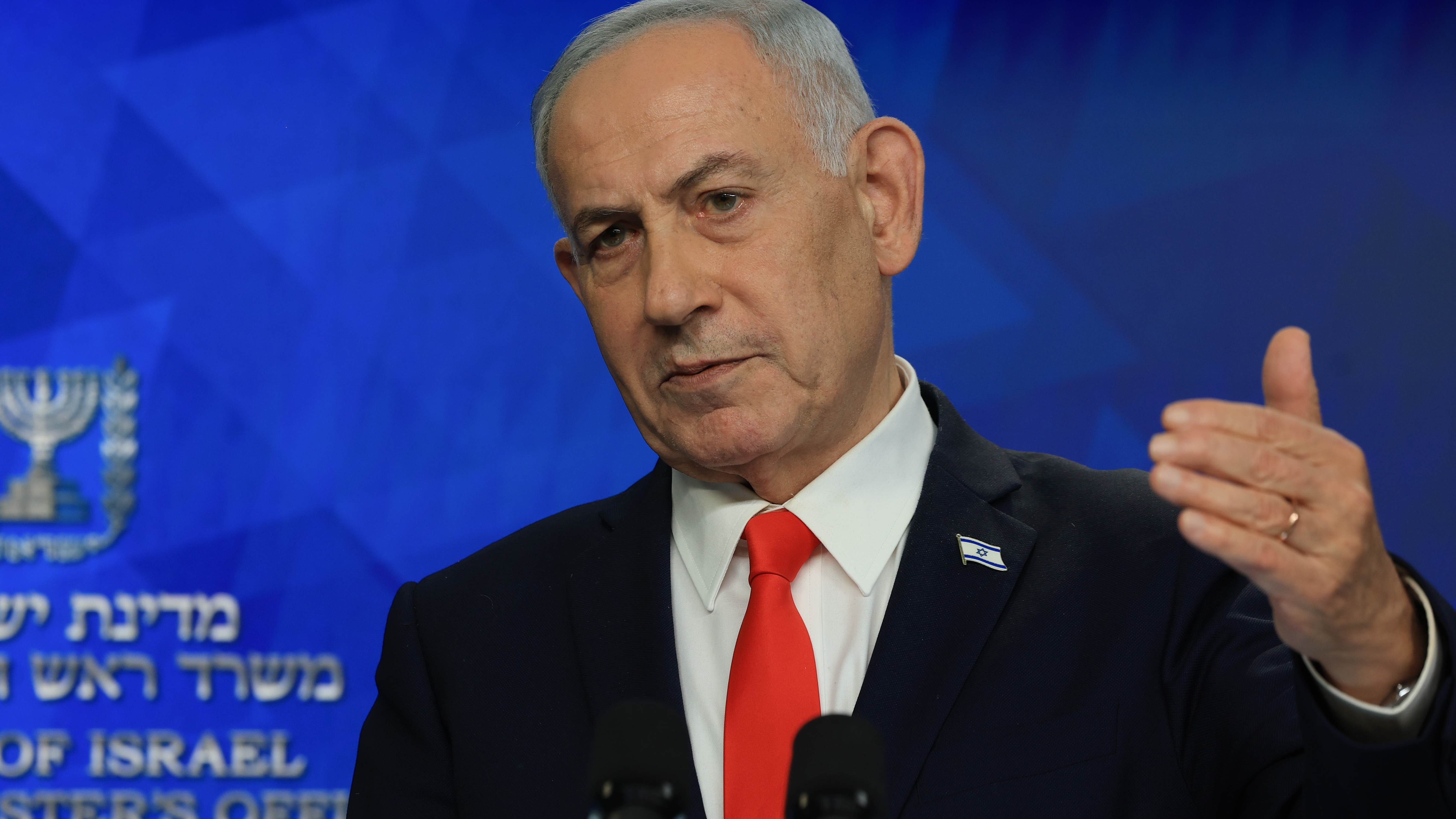
Young male voters are swinging away from the Republican party, new poll finds 24 Sep 2026, 6:15 am
Republicans’ 2024 gains among young men have evaporated — and that could have instant ramifications this November, according to a new Cygnal poll.
President Donald Trump narrowly carried young men in 2024, according to exit polls, a big swing toward the GOP from past elections. But Democrats’ generic ballot lead among male likely voters ages 18-30 now sits at 57%-40%, according to the new survey.
Trump’s favorability is underwater at just 38%-55%, and Republicans’ net favorability among the demographic now sits at -9 points, with 40% viewing the party favorably and 49% unfavorably.
One silver lining for the GOP: Among all registered voters sampled, including those least likely to turn out in November, the Democratic generic ballot lead is much smaller, 44% to 41%.
“It is not a very good electorate, if you're the Republican Party, among the people who are the most determined to vote,” said Alex Tarascio, pollster and principal at Cygnal, in an interview with POLITICO ahead of the poll’s release during Thursday’s Symposium on Young American Men.
Young men alone likely won’t determine control of Congress; they make up a fraction of the electorate, and they are less likely to vote than women of the same age or their older counterparts. But that lack of enthusiasm itself is a warning sign for Republicans, who will need to motivate their base ahead of November if they wish to maintain control of Congress.
The young men sampled are overwhelmingly concerned about cost-of-living issues — the same reason that many swung toward the GOP two years ago.
When given a list of options and asked which will matter most in determining their vote in November, a wide plurality — 29% — selected “inflation and the cost of living,” and another 14% chose “housing costs and being able to afford a place to live.” When asked what policies would make the biggest difference in their lives, the top answers again deal with the economy: The most-selected options were lowering the cost of goods, lowering housing costs and cutting taxes.
Many young men feel pessimistic about their ability to achieve success. When asked if they feel the rules in this country are set up to work for or against young men, 43% said they feel the rules are set up against them to 47% who said the rules are set up in their favor.
That pessimism bleeds into how they view other institutions. Both the Democratic Party (-1) and Republican Party (-9) have net-negative favorability among the demographic, and the White House’s current occupants are even more unpopular: Vice President JD Vance sits at 37% favorability with -10 net favorability, while Trump is at 38% favorability with -17 net.
“Young men are pretty down on institutions and political figures, and this one isn't any exception to that,” Tarascio said.
Republicans successfully targeted young men and low-propensity voters in 2024 to help propel them to victory largely in part by having Trump sit for interviews with podcast hosts and influencers popular with young men. Trump has yet to return to those forums en masse ahead of the midterms, but he’s repeatedly told voters to pretend as if he’s on the ballot in November.
But Trump may no longer be the motivator he once was for turning out young, male, low-propensity voters. Among those surveyed who were least likely to vote, Trump’s net favorability is -22, lower than the respondents most likely to vote, where his net favorability is -19.
“If Trump gets in front of them, I don't think it's a bad bet, but for some of these people it could backfire,” Tarascio said.
The poll was conducted Sept. 15-18 with a sample of 800 registered male voters ages 18-30. The margin of error is plus or minus 3.46 percentage points.
This article originally appeared on Politico at https://www.politico.com/news/2026/09/24/young-men-splitting-from-trump-01091318
8 sailors assigned to U.S. carrier group that fought in Iran war attempted suicide, Navy says 24 Sep 2026, 5:40 am

EDITOR’S NOTE: This story contains discussion of suicide. Help is available if you or someone you know is struggling with suicidal thoughts or mental health matters. In the US, call or text 988 for help. The International Association for Suicide Prevention and Befrienders Worldwide have contact information for crisis centers around the world.
Eight US Navy personnel assigned to the USS Abraham Lincoln carrier strike group attempted suicide during a period that included when the ships undertook combat operations against Iran and the carrier set a modern record for its time at sea, according to a letter from the service’s acting secretary, which was obtained by CNN.
Acting Navy Secretary Hung Cao revealed the number, which has not been previously reported and covers crew members from several ships that travel together, including the carrier, in written responses to questions posed by Sen. Kirsten Gillibrand about the morale and mental health of the USS Abraham Lincoln’s crew. Cao wrote that no service members had killed themselves during the deployment.
The rate of suicide attempts among the Lincoln strike group’s sailors was roughly consistent with that of the entire active duty Navy in 2024, the most recent year for which the Pentagon has released suicide data. That year, the Navy saw 356 suicide attempts among its estimated 337,000 active duty sailors.
“Since the beginning of Lincoln’s deployment, there have been a total of eight suicide attempts across the strike group,” Cao wrote to Gillibrand, a Democrat and member of the Senate Armed Services, in a letter dated Tuesday. “This number includes the Lincoln crew and sailors from the carrier airwing, strike group and destroyer squadron staff, escorting destroyers and all embarked aviation squadrons.”
Between 6,000 and 7,000 US Navy sailors were deployed as part of the Lincoln strike group across roughly a half dozen ships — with the carrier kept out of port for over six months while conducting a high rate of combat operations against Iran.
“Eight attempted suicides is incredibly high,” one US military official told CNN, noting recent carrier strike group deployments have had one or two per year. “The strain of combat ops is much higher than normal deployments. No port calls, constant alerts, etc.”
The Navy did not respond ahead of publication to a request for comment about the letter.
“What Trump and Secretary Hegseth dismissed as ‘fake news’ turned out to be serious and deteriorating conditions for our service members,” Gillibrand said in a statement Wednesday to CNN. “Our troops and their families make immense sacrifices every single day, yet the president dismissed them with open disrespect. That this administration can find endless taxpayer dollars for bombs, ballrooms, and billionaires, but cannot take care of our service members, is completely unacceptable.”
The Lincoln deployed with various mental health resources onboard, including five chaplains, one embedded integrated prevention counselor, one psychologist, one clinical social worker, three behavioral health technicians and one expeditionary facility dog, according to Cao’s letter.
CNN previously reported that two sailors assigned to the Lincoln strike group, one from the carrier and one from another ship, had jumped overboard in recent months. Both were rescued, US officials said. Others were prevented from jumping, according to reports from the Navy Times and Stars and Stripes.
In his letter to Gillibrand, Cao also confirmed that a sailor assigned to the airwing went overboard from the ship in early August but was “quickly recovered” and treated by the Lincoln’s medical department. “Additionally, one sailor attempted to go overboard in March and was stopped by his shipmates. That sailor was also provided immediate medical care and subsequently returned to homeport.”
The Navy previously said in a statement to CNN, “We have not observed an increase in suicidal ideations or attempts aboard the ship. We take every service member’s well-being seriously and have religious, medical and mental health professionals available to assess and address concerns as they arise.”
A US official also previously told CNN that the Navy does not believe there is a correlation between deployment length and thoughts of self-harm, and that man overboard incidents are not unique to this group.
A crew member serving on the Lincoln previously described to CNN that morale on the carrier was very low and said they had heard repeatedly about suicidal ideation by fellow crew members. And there were regular strains on essential amenities — toilets and water fountains around the ship frequently closed, and hot water was often unavailable, the crew member said.
unknown content item
-“Everyday we wake up and listen to our captain speak, we are desperately hoping and anxious for updates on our return,” the crew member, speaking before the ship had been ordered to return to its home port in San Diego, told CNN. The ship left the Middle East in August and is expected back in San Diego in the coming weeks.
Other sailors aboard the Lincoln who spoke with CNN described conditions unlike their prior deployments, largely due to the combat that has kept the carrier from making stops at friendly ports. Ships can take on new supplies and allow their sailors to rest and relax during those port calls.
This story has been updated with additional details.
CNN’s Davis Winkie and Pamela Brown contributed to this report.
For more CNN news and newsletters create an account at CNN.com
This article originally appeared on CNN at https://www.cnn.com/2026/09/23/politics/eight-sailors-lincoln-carrier-group-iran-war-attempted-suicide
Trump dismantled U.S. climate policy. But his war is cutting emissions. 24 Sep 2026, 4:16 am
President Donald Trump dismisses climate change as a hoax. He calls federal policies aimed at curbing it a wasteful “Green New Scam.” His administration has worked furiously to gut such policies and unleash unbridled consumption of fossil fuels.
But the Trump agenda has inadvertently dealt a sizable blow against global warming.
His war on Iran, now in its seventh month, has led to a plunge in the consumption of oil and gas around the world as fighting disrupts production and transportation.
Analysts had initially forecast that the shortages would be just a blip in the global economy, with the conflict winding down quickly and fuel exports ramping right back up to where they were. That is not how things are playing out.
The shortages have gone on for so long that they are aggressively driving down how much carbon is being released into the atmosphere, a Washington Post analysis of data from the International Energy Agency shows. People worldwide are using significantly less oil and gas, which means less climate pollution.
These charts show how the revised 2026 forecasts for oil, gas and coal use from the International Energy Agency have markedly changed the emissions outlook. They build on a development first spotted by the outlet CarbonBrief.
In January, IEA forecasts anticipated big increases in emissions from the fossil fuel sector compared with 2025. By this month, the outlook had changed drastically. Even with a spike in coal burning, as countries race to replace the oil and gas they can no longer access or afford, fossil fuel emissions this year are on track to be significantly lower than they were last year.
Such an annual decline has not happened since the height of the coronavirus pandemic. Fossil fuel consumption dropped significantly more then, and consumption was lower in absolute terms, too. Crude oil demand averaged 91 million barrels per day in 2020, compared with 102 million barrels per day under the latest IEA forecast.
But this year’s drop - especially given the sharp increase that was initially forecast - is substantial.
The IEA analysis suggests global demand for oil in 2026 will decline 2.5 percent compared with last year. That would erase the amount of greenhouse gas emissions created by 42 million internal combustion engine cars.
And the IEA had initially projected the world’s appetite for oil and gas would grow significantly over last year, so much so that the difference between its January projections and what is actually happening is the equivalent of avoiding the emissions from 103 million cars.
The open question is how much of the drop in oil and gas use - known in the industry as “demand destruction” - is permanent. That is hotly debated in the energy industry, with many forecasts showing demand returning to prewar levels in 2027.
But economists generally agree that the longer an energy disruption persists, the more permanent the shift may be.
Drivers burdened by gas shortages and soaring prices turn to hybrids and fully electric vehicles. Utilities unable to get shipments of liquefied natural gas shift to wind, solar and nuclear power. Homeowners trade in their oil-burning furnaces for heat pumps and rooftop panels. The economics of budding technologies, such as geothermal power, start to look more attractive, leading to infrastructure investments that permanently shift what energy is consumed for decades.
Some of these shifts are already playing out around the globe.
“The IEA expects 2027 demand to barely recover to pre-conflict levels, and a portion of demand destruction may be permanent,” Pavel Molchanov, an investment strategy analyst at Raymond James, assessed in an email this month.
DNV, a multinational consultancy that models global energy demand, has dropped the assumption held by many in the industry that oil and gas consumption will come roaring back.
“It is time to acknowledge that we could all be wrong,” the firm wrote in a report a few weeks ago. It noted how EV sales are surging in some parts of the world, and how expected sustained high prices of diesel - regardless of when the war ends - could reshape the shipping industry. It pointed out how the shortage of natural gas in Europe at the outset of Russia’s full-blown invasion of Ukraine in 2022 led to a permanent shift away from imported energy. Renewables installations have surged on the continent since then.
“For every month the conflict lasts,” DNV wrote of the war in Iran, “the probability of permanent demand destruction increases.”
- - -
Graphics:
Energy crunch sends global fossil emissions plunging in 2026
Oil and gas emissions plunge as coal ticks up
Related Content
This article originally appeared on Washington Post at https://washingtonpost.com/business/2026/09/24/how-trump-is-unintentionally-helping-worlds-climate/Republicans break ranks on Iran as voters fume over war's costs 24 Sep 2026, 3:00 am

Republican support for the war in Iran is dropping as Senate GOP candidates speak out against it and voters increasingly blame high gas prices on the nearly seven-month conflict.
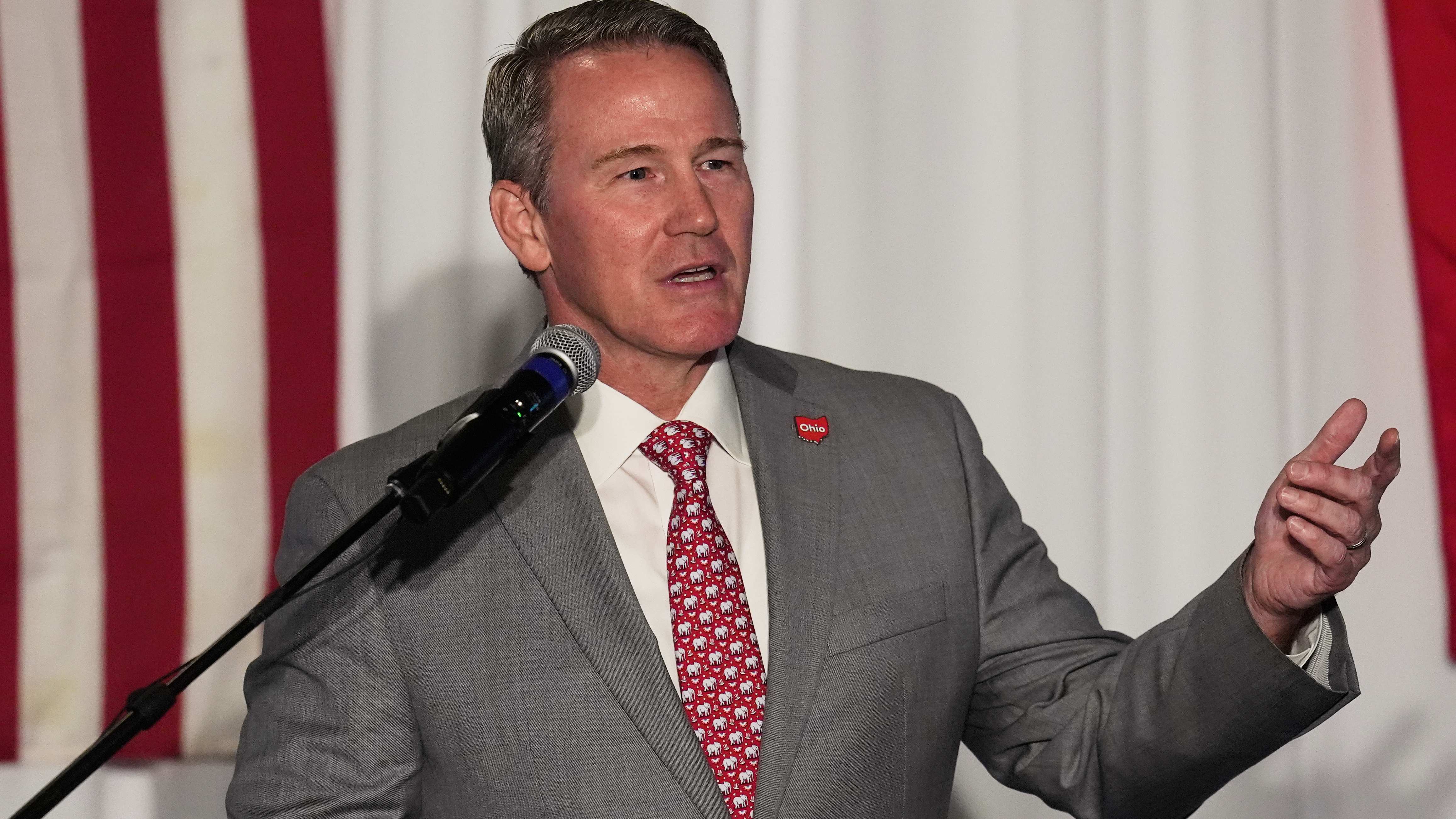
Growing public opposition among even Republican voters has put incumbents such as Sens. Jon Husted (R-Ohio), Dan Sullivan (R-Alaska), Roger Marshall (R-Kan.) and Pete Ricketts (R-Neb.) in a tough political position.
Several of these Republican candidates, including Husted; former Rep. Mike Rogers (R), who is running for Senate in Michigan; and Rep. Ashley Hinson, the Republican Senate candidate in Iowa, are calling for a swift end to the war.
“The war with Iran needs to end, and end quickly,” Rogers urged in a campaign video Monday.
Hinson on Monday wrote on social media that “the war needs to be brought to a successful and immediate end.”
Husted told Politico on Tuesday that “the war needs to come to an end as quickly as possible so that we can lower gas prices.”
The calls are also coming from the lower chamber.
Speaker Mike Johnson (R-La.) in an interview with a local TV station urged “a resolution” to the war.
Recent polls show that Rogers and Husted are trailing their Democratic opponents, Abdul El-Sayed and former Sen. Sherrod Brown (Ohio), respectively.
Hinson, meanwhile, is locked in a tough race the Cook Political Report last month shifted to “toss-up.”
A Republican senator who requested anonymity to discuss voter frustration over the war and high gas prices said there’s growing political pressure on GOP candidates to oppose the unpopular conflict.
“People are very, very concerned about costs. They associate higher fuel costs with the Iran war, directly. Farmers are very, very concerned. All their input costs are being driven up. It’s a problem,” the senator said.
Hinson on Monday wrote that “Iowans are being squeezed and shouldn’t have to foot the bill at the pump or the checkout line for the war in Iran.”
Senate Majority Leader John Thune (R-S.D.) said Wednesday there are “a lot of Republicans” who want to end the war as quickly as possible.
“Everybody wants to see wars come to a conclusion,” he said. “We are hopeful that the administration’s efforts will lead to getting the Strait of Hormuz open, getting the shipping lanes open and taking some of the pressure off of the American people’s pocketbooks."
“We want to see that conflict come to an end,” he said. “I think the administration is working aggressively to make that happen.”
Sen. Jim Justice (R-W.Va.) called the conflict “a quagmire” but warned that President Trump can’t simply walk away while Iran still has a path to obtain nuclear weapons.
“All of us want it to end as soon as possible,” he said. “Our president decided we needed to go [to war] and we went, and I was fully supportive of going.
“Unexpected things come up within war,” he added. “Now we’re in a quagmire to some degree and energy prices are high. … This thing has turned into something [Trump] didn’t expect — none of us expected this, that this would go on this long.”
Democrats are expected to force a vote later this week on a House-passed concurrent resolution ordering Trump to withdraw troops from the conflict.
The measure is expected to pick up more Republican support, and a source familiar with the whip count said it has a good chance of passing.
Sen. Thom Tillis (R-N.C.) now says he will vote for the war powers resolution directing Trump to end the conflict.
“We’re reaching a point to where we just need answers. We got to know what success looks like,” Tillis said.
Tillis wants the Trump administration to lay out its plan for concluding the war and to ask for a formal authorization to continue the conflict.
“There’s never been any way to measure what success looks like,” he said. “For every step we take forward, we take a step back.”
He warned that the war has become a major political problem for Senate GOP candidates and the broader Republican Party.
Tillis said Republicans have seen “consistently downward-trending negative reaction since” the first strikes against Iran in February.
“We don’t know how long it’s going to go,” he said. “So we’re afraid it could be a forever war. It’s a war that’s obviously hurting people economically. Why are we doing this? What is the goal?”
Tillis said support for the war among Republican voters is dropping significantly.
A CNN poll conducted by SSRS of 1,206 U.S. adults nationwide found that support for the war among self-identified Republicans has dropped by more than 10 percentage points since March.
Six months ago, 73 percent of surveyed Republicans approved of Trump’s handling of the conflict, but that number has since dropped to 60 percent.
A Fox News poll of 1,211 registered voters nationwide conducted Sept. 11-14 found that 71 percent of voters think Trump doesn’t have a clear strategy for ending the war.
Sens. Susan Collins (R-Maine), Lisa Murkowski (R-Alaska) and Rand Paul (R-Ky.) are expected to vote later this week for the Democrat-sponsored war powers resolution. They have voted several times previously for Iran-related war powers measures.
A Republican senator who requested anonymity to discuss private conversations said other GOP colleagues could “flip” on the Iran war powers resolution.
Sen. Bill Cassidy (R-La.) is hinting he may also vote for it, complaining that there has been “very little” to “no” consultation with Congress about ending the conflict.
“Stay tuned,” he said last week.
Centrist Sen. John Fetterman (D-Pa.), who has repeatedly voted against war powers resolutions related to Iran, is expected to vote this week with Republicans against the measure.
Republican senators on Wednesday urged their colleagues in tough races — or candidates in battleground states such as Michigan — to say what they need to about the war to win in November.
“If I’m running in an environment like this, obviously you’re going to develop a campaign and a message that can win in your state. I encourage most candidates to run their own campaigns,” Thune said when asked about the calls from Rogers and Hinson to bring the Iran conflict to a swift end.
Sen. John Cornyn (R-Texas) said GOP candidates “are responding to their voters.”
“They got to listen to their constituents and be responsive,” he said.
Copyright 2026 Nexstar Media, Inc. All rights reserved. This material may not be published, broadcast, rewritten, or redistributed.For the latest news, weather, sports, and streaming video, head to The Hill.This article originally appeared on The Hill at https://thehill.com/homenews/senate/6107478-gop-support-iran-war-drops/
Australia says OpenAI agent hacked into government website 24 Sep 2026, 2:32 am
By Renju Jose and Chris Thomas
SYDNEY, Sept 24 (Reuters) - Australia said on Thursday an OpenAI agent breached a government health data portal in June, gaining unauthorised access to files, in what could be the first known instance of an AI agent hacking a government website.
The breach is one of the highest-profile incidents of AI agents accessing external systems outside the United States, coming on top of several recent breaches globally by rogue AI agents that have alarmed governments and companies.
Prime Minister Anthony Albanese said the OpenAI agent gained unauthorised access to the medical statistics portal of Medicare, Australia's universal health insurance programme, while conducting research on public medical spending.
"Evidence currently available is there is no broader compromise to the ... network. Nonetheless, this situation is obviously unacceptable," Albanese told reporters on Wednesday in New York, where he is attending the UN General Assembly.
Investigations continue and Australia has voiced its "extreme concern about this incident" to OpenAI CEO Sam Altman, Albanese said, adding that he was deeply disappointed by the company's delay in notifying the government. "It took until September 10 before there was any notification at all," Albanese said, adding that the investigation would also examine why government systems had failed to detect the breach in the first place.
He also warned that three other government health-related websites may have been impacted by the OpenAI agent's activity, but did not confirm that had occurred.
In a statement, OpenAI said its "review found no evidence of patient records being accessed."
It added that it "identified activity involving several Australian government websites and services as our models attempted to look up answers ... our models took actions we did not intend."
The AI agent breach adds to tensions between Australia and the largest US-owned technology companies. Canberra has already drawn criticism from social media firms and Washington after introducing a world-first ban on social media for children under 16 and new rules that force tech firms to let users switch off algorithm-driven content on their feeds.
The Australian government has set up a task force to investigate the breach and check whether existing network security is adequate for preventing similar incidents.
'AI MODELS ATTEMPTED TO LOOK UP ANSWERS'
The breach was announced the same day the world's leading AI companies warned the United Nations Security Council of the risks AI posed to humanity, appealing for governments to work together to manage the increasingly powerful technology.
Australia has faced a series of hacking attempts on corporations and government-linked firms over the past four years.
Defence Minister Richard Marles said the Medicare portal that was breached did not contain individual medical claims, benefit payments, personal banking details, or patient medical histories of Australia's 27 million people.
Instead, the website holds only aggregated data on healthcare use across the country, he said. However Australia considered the breach serious.
"There were blocks clearly which were coming back telling the AI agent 'no'. The AI agent found a way around those blocks - didn't accept no for an answer," Albanese told reporters.
The incident is the latest of several recent incidents in which ChatGPT maker OpenAI has disclosed hacks or unauthorised activity involving its AI agents well after they occurred.
Rivals Anthropic, Google's Gemini, and Meta have also disclosed incidents of their agents accessing external systems.
Maurice Chiodo, an Australian mathematician who works at Cambridge University's Centre for the Study of Existential Risk, said the breach appeared to be "a significant escalation in seriousness from similar incidents we have seen in recent months."
He added that while there was a lot of talk of new laws around AI, policymakers needed to first consider enforcing existing ones, like those that criminalise unauthorised intrusions into computer systems.
(Reporting by Renju Jose in Sydney, Chris Thomas in Mexico City, Gnaneshwar Rajan in Bengaluru, Raphael Satter in Washington; Editing by Maju Samuel, Jonathan Spicer, Clarence Fernandez and Sonali Paul)
This article originally appeared on Reuters at https://uk.finance.yahoo.com/news/australia-pm-albanese-says-openai-204422718.html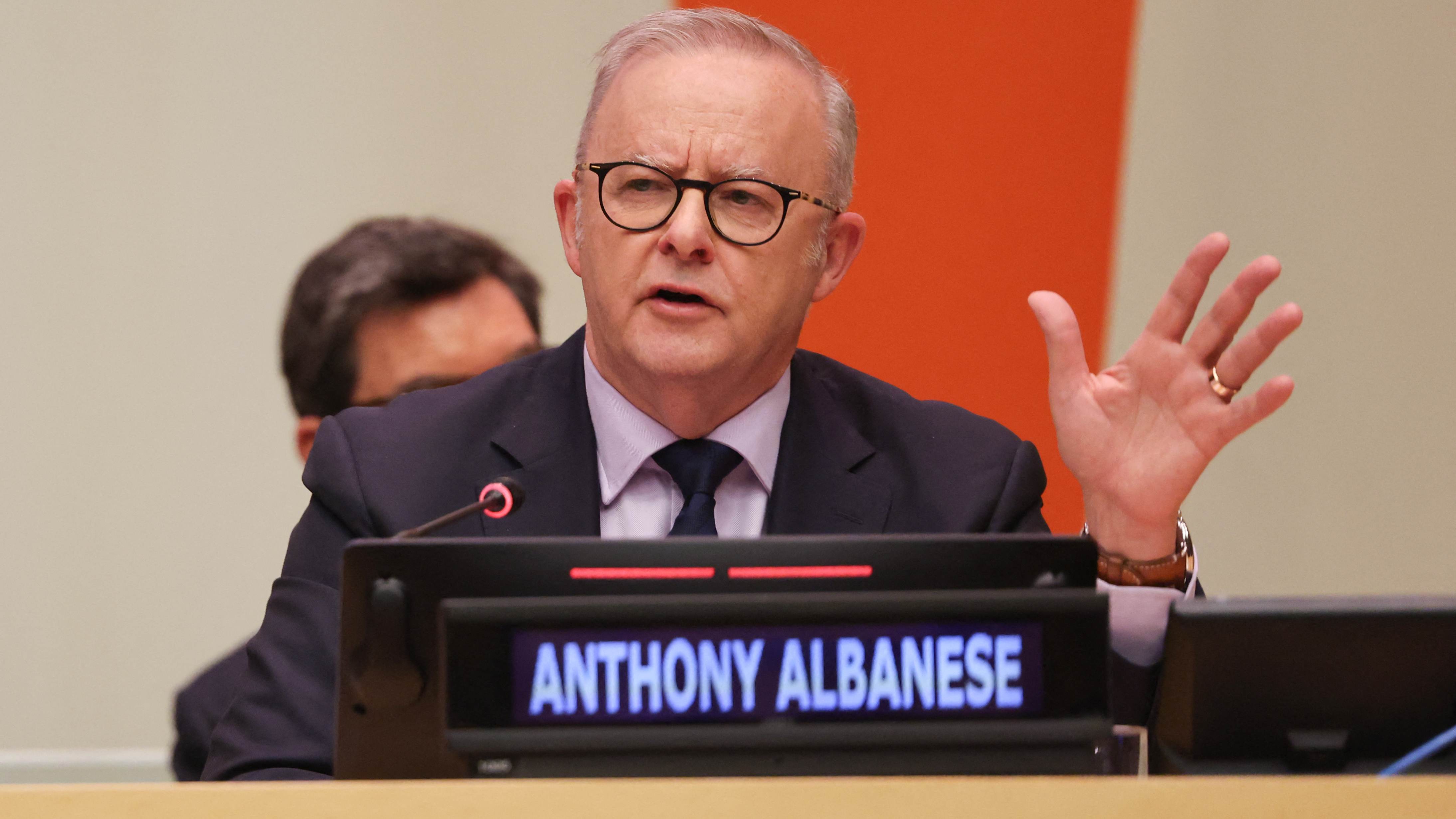
Republicans hope cash and attack ads can blunt Democratic gains in the midterms 24 Sep 2026, 2:00 am
With six weeks to go until Election Day and early voting already underway in a handful of states, the conventional wisdom is that Republicans may be in for some setbacks in the midterms.
As it defends its fragile House and Senate majorities, the GOP is fighting political history, which has traditionally seen the president's party lose congressional seats during the midterms. It's also battling high costs at the grocery stores and gas pumps tied to what polls show is an unpopular war with Iran, as well as President Donald Trump's underwater approval ratings.
But Democrats are saddled with their own issues, from an ideological civil war between the party's left wing and the establishment that has handed Republicans plenty of political ammunition, to a brand image that's nothing to brag about. Add to that the Democrats' major disadvantage as the GOP floods the airwaves with attack ads.
Here are six forces that will likely determine whether Republicans can turn back a possible blue wave and hold power in Congress.
Who's Up And Who's Down In The Latest Fox News Midterm Election Polling

Six weeks until Election Day, and just as the voting begins, fuel prices keep rising, with the national average for gas nearly $4.50 per gallon and diesel topping $6.50 per gallon, according to AAA.
Public opinion polls point to the economy, including the cost of living, as the top issue for voters in this year's midterms. That means that the issue that boosted Trump and Republicans to sweeping victories in 2024 is a major liability in 2026. And the rising prices in recent weeks, fueled by renewed fighting in the war with Iran and Ukraine and attacks on Russia's diesel industry, are doing the GOP no favors.
"Gas prices were much higher under Biden than under ‘TRUMP.’ So were almost all other prices," the president argued Monday in a social media post, as he referred to former President Joe Biden.
While Trump and Republican leaders point fingers at Biden, polls indicate voters increasingly place the blame for ongoing economic and inflation pressures on the current administration.
Democracy ’26: Stay Up To Date With The Fox News Election Hub
Democrats last week heavily criticized Trump and Republicans after the president argued that fuel costs were "a very inexpensive price to pay for what we’ve done," as he pointed to the attacks on Iran's nuclear facilities.
Meanwhile, the latest Fox News poll indicated that by a wide margin, the Democrats are considered the party that would better handle inflation.
But when asked about the overall economy, recent national surveys from Reuters/Ipsos and NBC News had the GOP and Democrats all knotted up on which party would better handle the issue.
"My listeners are looking for prices to come down across the board," New Hampshire-based center-right talk radio host Jack Heath told Fox News Digital.
"People elected President Trump to lower prices and improve their situation and people are looking for that improvement," Heath, host of "Good Morning NH," emphasized. "They're looking for Trump to deliver on his promises."
"I'm asking you to just pretend I'm on the ballot just one more time," the president said last week during a campaign stop in battleground North Carolina.
It's a line Trump repeatedly used earlier this month, at the GOP's first-ever midterm convention.
Facing what polls indicate is an enthusiasm gap with Democrats, the president and Republican leaders are hoping to energize the MAGA base, which doesn't always vote when Trump isn't on the ballot. While the president's approval rating in the Fox News poll stands at 39% among all voters, it remains at a sky-high 98% among self-described MAGA Republicans.
Sign Up To Get The Politics Newsletter

But some longtime Trump allies are starting to break with the president as they face challenging re-elections.
GOP Rep. Maria Salazar won re-election two years ago by 20 points in South Florida's 27th Congressional District. But with Trump's negative poll numbers a potential anchor around her, Salazar last week released a TV ad criticizing the Trump administration’s immigration enforcement as having "gone too far," and that "Hispanics who helped you get to the White House in 2024 feel betrayed today."
Meanwhile, on Monday, two Trump allies who are in heated Senate battles — Rep. Ashley Hinson of Iowa and former Rep. Mike Rogers of Michigan, broke with the president as they demanded a swift end to the war with Iran.
Watch whether vulnerable Republicans create more distance from the president, or move toward Trump to juice Republican turnout.
Republicans are aiming to turn what's normally a referendum on the party in power into a choice election, as they spotlight major Democratic primary victories this year by far-left and socialist candidates over more mainstream Democrats.
"In state after state, the Democrat establishment has been overthrown and replaced by crazed lunatics and radicals. They call themselves Democrat socialists, but actually, they’re communists," Trump charged at the midterm convention.
The messaging is pronounced in Michigan's crucial Senate race, where GOP nominee former Rep. Mike Rogers, as he referred to Democratic rival Abdul El-Sayed, told FOX Business this week, "We don’t want this socialism nonsense in our state, and this guy is too extreme."
12 Senate Races That Will Determine Who Controls The Chamber

Polling gives a boost to the GOP's "commonsense vs. crazy" messaging.
Fifty-five percent of registered voters surveyed in the latest Fox News national poll held an unfavorable view of the Democratic Socialists of America (DSA), while only three in 10 saw the DSA in a positive light.
The Fox News poll was the latest national survey to show that while the DSA has gained traction among Democrats, the group and the broader socialist movement in America face significant national skepticism.
While the GOP full court press continues, in hopes of swaying undecided voters, Democrats are divided on its effectiveness.
Ty Strong, founder and president of the Moderate PAC, warned that the GOP playbook "absolutely could be effective."
But Shannon Jackson, a key consultant and advisor to progressive leader Rep. Ro Khanna of California, argued that Republicans are "reaching for things. I think the DSA issue is something they’re trying to make something, but it is not."
Meanwhile, this year's primary surge by socialist and left-wing candidates isn't helping Democrats boost their brand.
The party's favorable ratings hit historic lows in the months following the 2024 election, and the latest Fox News poll indicates Democrats are still well underwater, with 55% of voters viewing the party in an unfavorable light.
Republicans enjoy a formidable cash advantage over the Democrats, and they're using it in the final stretch leading up to Election Day.
While Democratic candidates in many key races have outraised their GOP opponents, the Republican National Committee remains far ahead of the rival Democratic National Committee when it comes to cash-on-hand.
And GOP-aligned outside groups, including the Trump-allied MAGA Inc., are opening the floodgates when it comes to ad spending, in order to try and level the playing field by overcoming the difficult political environment.
Republican groups have outspent their Democratic counterparts by more than $83 million to run spots in ten crucial Senate races since the start of September, according to figures from AdImpact, a nationally known firm that tracks ad spending.
While a financial advantage is not always decisive, strategists say it can often move the needle in a close contest. And in the 10 Senate races spotlighted by AdImpact, a onetime Democratic ad spending advantage over the summer turned into a major GOP deluge.
While much of the ad dollars dished out by Republicans are to protect vulnerable seats, the money may help as the GOP works to flip open-Democrat-held Senate seats in Michigan and New Hampshire.
Thirteen months ago, Texas passed a new congressional redistricting map, giving Trump his first major victory in his push to give Republicans a big boost heading into the midterm elections by drawing more right-leaning districts.
Fast-forward to present day, and as they fight to hold their razor-thin House majority, Republicans were the big winners, with partisan redistricting netting them potentially 10 additional right-leaning congressional seats in time for the midterms.
But redrawing the maps and winning the seats are two different things, and some election analysts caution that the fierce headwinds facing the GOP could lead to Republicans falling far short of their original expectations heading into the redistricting wars.
There are 435 seats in the House of Representatives, but the Cook Report suggests the battle for the chamber's majority could come down to just 21 districts it rates as a toss-up.
The Fox News Power Rankings list 17 seats as true toss-ups.

Decades of gerrymander, including this cycle's mid-decade redistricting, have made a major impact by narrowing the House battlefield, which may limit the number of pickups by the Democrats even if a blue wave forms.
While the number of competitive House seats stays historically small, the Senate map is widening, which is a positive sign for Democrats.
Democrats are feeling the heat in open-seat contests in Michigan and New Hampshire, two must-holds for them as they try to win back a Senate currently controlled 53-47 by the GOP.
But Senate showdowns in red states, including Alaska, Kansas, Nebraska, and Iowa, are now considered very competitive.
Click Here To Download The Fox News App
Need proof: Vice President JD Vance campaigned in Iowa and Kansas last week.
But recent polling is also giving Republicans hope they can flip the Democrat-controlled open Senate seat in blue-leaning Minnesota.
Original article source: Republicans face brutal midterm headwinds. Six forces could help them defy history.
This article originally appeared on Fox News at https://www.foxnews.com/politics/republicans-face-brutal-midterm-headwinds-six-forces-could-help-them-defy-history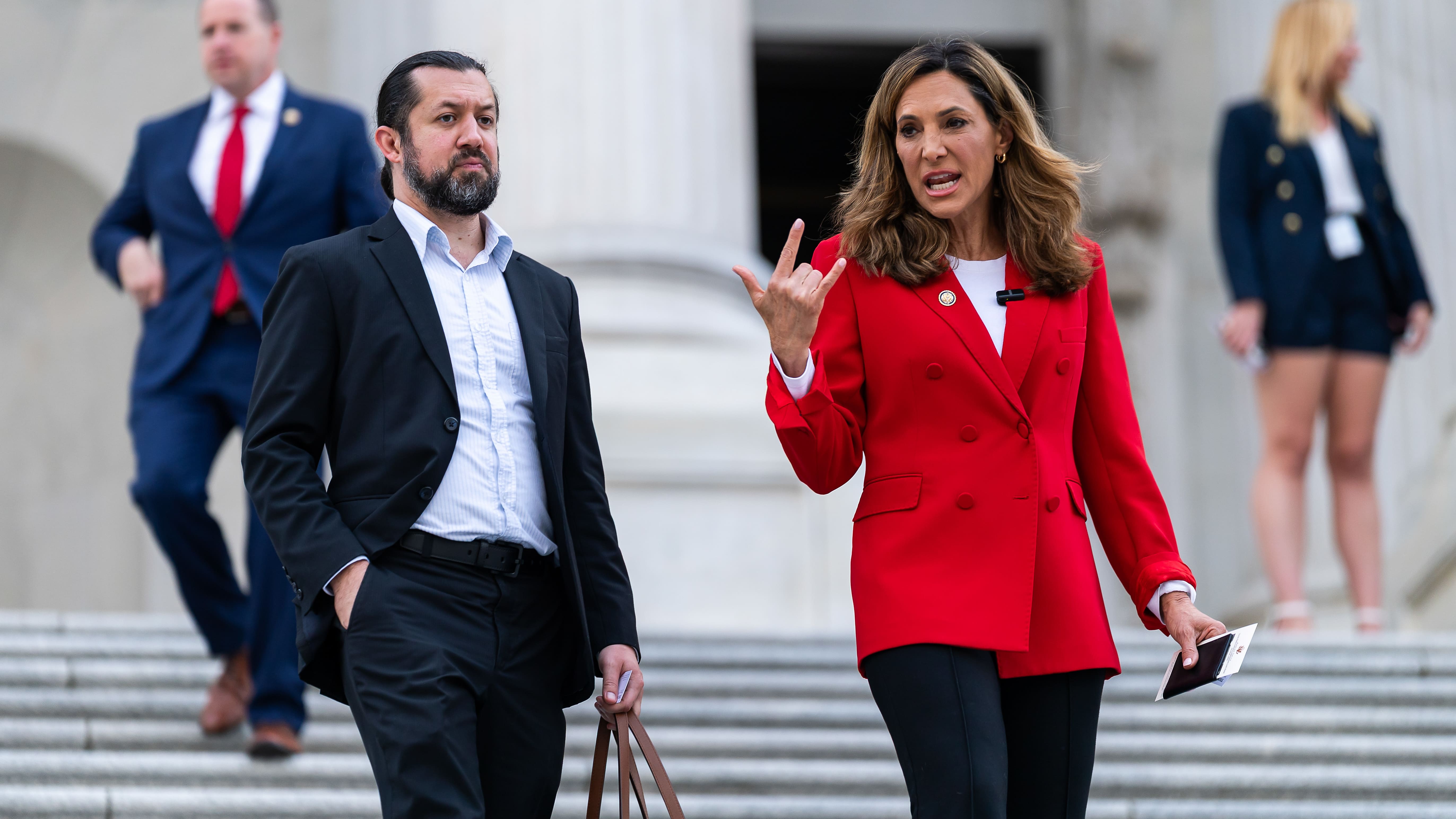
Dems are being outspent in midterm races — but disagree on where money should go 24 Sep 2026, 2:00 am
Democrats are begging for more money ahead of November. But they’re torn over what to do with the limited funds they already have.
After months of downplaying their financial concerns, the four Democratic groups most responsible for delivering control of Congress are now issuing public pleas for more donations as Republicans swamp them on the airwaves. And party leaders are grappling with tough choices on which races to spend their limited dollars as campaigns clamor for backup.
“We need more cash” to expand the map, said Democratic Congressional Campaign Committee Executive Director Julie Merz.
Mike Smith, who leads House Majority PAC, warned if Democrats “can’t compete dollar-for-dollar in these closest races, they risk putting winnable seats out of reach.”
Devan Barber, who runs the Democratic Senatorial Campaign Committee, expressed excitement about “opportunities to expand the map further. But, “Additional investments require additional resources.”
Added Senate Majority PAC spokesperson Lauren French: “We want to win the majority, and that costs money.”
Republicans are poised to massively outspend Democrats on advertising: Since the start of August, they have placed $820 million in ad buys across the Senate map, compared to $556 million from Democrats, including future bookings through Election Day. That includes outspending Democrats in all but one of the nine most expensive Senate races, according to a POLITICO review of data from AdImpact, which tracks political advertising.
On the House side, the GOP has spent or booked $454 million across the map to $381 million for Democrats. That disparity grows even larger in the districts that were within 10 points at the presidential level in 2024.
House Democrats are currently planning to spend more in more heavily GOP districts than Republicans, as they hope to leverage voters’ frustration with the economy and the Trump administration to expand their map. But if they use their limited war chests and stretch too far into red territory, Democrats could end up losing must-win contests that they need for their House and Senate majorities.
It’s a dilemma that’s leaving Democrats at odds over which races to prioritize, according to interviews with more than a dozen party lawmakers, operatives and donor advisers.
“The problem you have here is there are just too many targets. What's real and what's fool's gold?” said one Democratic operative working on multiple battleground House races, who, like others in this story, was granted anonymity to speak candidly about strategy. “Now that everybody's got a good internal [poll] showing a deadlocked race, where do you go?”
A muddied Senate map
It’s not quite clear which states could net Democrats the four Senate seats they need to seize the upper chamber, complicating their spending debates.
Democrats need to hold Georgia, Michigan and New Hampshire, and flip blue-leaning Maine and swing North Carolina. After that, it’s a question of which red states President Donald Trump won by double digits in 2024 are the best investment to get at least two more seats amongst Alaska, Iowa, Ohio and Texas.
Texas is the big question: Republicans have outspent Democrats on the airwaves in the vast and expensive state by a roughly three-to-one margin since Aug. 1, even as Democrat James Talarico remains slightly ahead of GOP nominee Ken Paxton in most public polls. Neither the DSCC nor SMP have spent on TV ads there, though French said SMP is “taking a close look” at the race. But some Democratic senators are calling for more investment as donors like the progressive network Way to Win push money toward the state.
(The DSCC did include Texas as part of an earlier $40 million infrastructure spend across 10 states, though it’s unclear how much they’ve spent in the state.)
Polling that shows tighter than expected races in Kansas and even Mississippi has also piqued donors’ interest and drawn attention from some prominent Democrats.
Sen. Ruben Gallego (D-Ariz.) said Wednesday that Democrats should “go big” in Texas and invest in Kansas, Iowa, Mississippi and South Carolina.
“There’s real possibilities here of us kind of needing to really expand the map,” Gallego said. “I think a lot of states that are already competitive are well funded now, but we should try to kind of see how much further we can go.”
His home-state colleague holds a similar view.“We actually have a chance in Kansas,” said Sen. Mark Kelly (D-Ariz.), who campaigned for Democratic nominee Adam Hamilton last month. “You got to take the shots you got.”
But that building interest in redder states has raised alarms among some senators and operatives who warn they need to keep the focus on defending seats that Democrats can’t flip the Senate without.
States like Texas and Kansas are “in play like they've never been before, so I don't want to discount that,” said one Democratic senator. But when donors "go after the shiny object, that's when it gets really dangerous.”
Michigan and New Hampshire Democrats are privately urging senators and donors to do more to boost Abdul El-Sayed in Michigan and Rep. Chris Pappas in New Hampshire. Sen. Elissa Slotkin (D-Mich.), who is holding a fundraiser for El-Sayed next week, told POLITICO that Democrats need “more help in Michigan.”
Some senators quietly suggested shifting resources away from two races that are looking increasingly good for Democrats, Georgia and North Carolina, to spend elsewhere. That’s even as some of North Carolina Democratic nominee Roy Cooper’s team publicly urges donors to “Keep Roy funded” as they privately fear the race in the purple state could tighten significantly.
“North Carolina is our best shot right now. We’ll see how that goes and hopefully that might be able to free up some resources that we can put to some of the other ones that are not quite in that situation,” said another Democratic senator. “We really want to shore up … New Hampshire and Michigan. I think those are ones that we can get into a better place.”
An aggressive bet on the House
Democrats are more confident about flipping the House, and in some ways are making a more aggressive bet than their Senate counterparts — putting more money into reach seats at the risk of underfunding their candidates in more traditional battlegrounds.
Since the start of August, Republicans are significantly outspending Democrats on the air in House races in districts that were within 10 points at the presidential level in 2024, according to a POLITICO analysis. They have a roughly $90 million spending advantage across those districts, including future ad buys — a roughly three-to-two edge.
The disparity is particularly pronounced in a handful of purple districts. Rep. Mike Lawler (R-N.Y.) has $20 million spent and reserved for him since the start of August to just $3.8 million for his Democratic opponent, Cait Conley. Republicans have $16.4 million reserved and spent for Rep. Tom Kean Jr. (R-N.J.) over that period compared to $2.3 million for Democrat Rebecca Bennett.
But Democrats have the spending advantage in deeper-red House districts: The only category where they’ve got more money spent and reserved than Republicans is in districts Trump won by more than 10 points.
Both sides’ spending suggests they know the map runs into deep red territory: Twenty-five districts that Trump won by 10 or more points in 2024 are attracting spending from at least one of the major party-aligned outside groups. By contrast, only 15 districts that Kamala Harris won by any amount are getting money from them. Outside groups are also targeting 13 districts Trump won by between 5 and 10 points and 18 he won by less than 5 points.
Republicans argue they can negatively define Democrats and keep an advantage in these seats to keep the majority. “By the time [Democrats] find the cash, voters will already know exactly who they are,” Mike Marinella, a spokesperson for House Republicans’ campaign arm, said in a statement.
Democrats insist they don’t need to match Republicans dollar for dollar, arguing their message is more potent in an environment where everyday costs continue to climb.
But they’re also well aware they’re getting trounced across the traditional battlefield. One Democratic operative working on several battleground House races told POLITICO they’re particularly concerned about districts that aren’t in states with Senate races that attract more national attention and more resources along with it. The person specifically cited battleground races in Pennsylvania, Arizona, New Jersey, New York, Texas and California.
House and Senate Democratic leaders also put the squeeze on their members in separate closed-door caucus meetings last week to pay their dues and up their fundraising. House Minority Leader Hakeem Jeffries pledged additional resources from his own coffers and pressed rank-and-file members to chip in as well, according to three people inside each meeting.
Brian Derrick, the CEO of the Democratic fundraising platform Oath, which directs donors to competitive races where Democrats need cash the most, issued a stark warning about the party’s prospects if more cash doesn’t come.
“In a cycle where Republicans have a historic amount of money to throw around, we know we're going to lose races that we could have won had we funded them better,” he said.
Meredith Lee Hill and Erin Doherty contributed to this report.
This article originally appeared on Politico at https://www.politico.com/news/2026/09/24/democrats-midterms-money-worries-disagreements-01090770
Tim Scott gives GOP senators a blunt midterms warning in closed-door meeting 23 Sep 2026, 8:38 pm
In a closed-door meeting with lawmakers, the chair of the Senate GOP's campaign arm made the case that the party can still outrun a difficult political environment and hold on to the Senate in the November midterms, multiple people in the room confirmed to CBS News.
"We're in the fight for our lives with a record number of toss-up races," Sen. Tim Scott of South Carolina, who chairs the National Republican Senatorial Committee (NRSC), told his colleagues during Wednesday's meeting, CBS News has learned.
With just under six weeks until the midterms, Scott said the group will focus its future spending on a handful of tight races where it is either defending GOP-held seats or attempting to flip Democratic seats, the people said.
Scott pointed to Maine, Texas, Ohio, Iowa and Alaska as among the seats the party is defending. As for opportunities to go on offense, he named New Hampshire and Michigan.
Semafor was first to report on Scott's comments.
The meeting came as Republicans aim to defend their narrow majorities in the House and Senate — and prepare to face down political headwinds wrought by President Trump's sagging approval ratings, tied in part to voter dissatisfaction with the cost of living and frustrations with the Iran war. Democrats have sought to capitalize on the political environment, mounting strong challenges against GOP Senate candidates in red states like Ohio, Texas, Iowa and Alaska.
Historically, the party that controls the White House almost always loses ground in the midterms. During his closed-door presentation, Scott argued Republicans could follow a trajectory similar to the one their opponents traced in 2022, when Democrats gained a Senate seat despite losing the House and struggling with then-President Joe Biden's rough approval ratings.
Senators were also told during the presentation that Republicans are aiming to take advantage of a Supreme Court ruling that struck down limits on the amount of money groups like the NRSC can spend in coordination with candidates, according to a source in the room.
With a 53-47 majority, the Senate Republican conference can afford to lose as many as three seats and still hold on to the chamber, with Vice President JD Vance serving as a tiebreaker.
One of the most vulnerable GOP-held seats is in Maine, where Sen. Susan Collins is seeking a sixth term in a state that has trended leftward. But Collins — who is running against Democratic former state lawmaker Troy Jackson — has survived tough reelection battles in the past, winning by 8.6 points in 2020 despite being dramatically outspent by her Democratic opponent.
And in North Carolina, a light-red state that Mr. Trump narrowly won three times in a row, Democrats are vying to replace retiring GOP Sen. Thom Tillis with popular former Gov. Roy Cooper. Most polls show Cooper with an edge over Republican nominee Michael Whatley.
Scott told his Republican colleagues Wednesday that internal polls showed tightening races in North Carolina and Minnesota, where Democratic Lt. Gov. Peggy Flanagan is facing off against former sports reporter Michele Tafoya. Minnesota is represented by a retiring Democrat.
A Democrat hasn't won statewide in Texas in over 30 years, but the party's nominee, James Talarico, is running against a polarizing Republican candidate in Attorney General Ken Paxton, who defeated incumbent GOP Sen. John Cornyn in the primary.
Democrats are also looking to flip Senate seats in Iowa and Ohio — two former swing states that have shifted rightward — as well as red-leaning Alaska.
Senate Republicans are aiming to pick up two seats held by retiring Democrats: New Hampshire and Michigan. The GOP nominee in New Hampshire, former Sen. John E. Sununu, comes from a well-known local political dynasty. Michigan Republicans, meanwhile, hope to take advantage of lingering fissures within the Democratic Party after progressive Abdul El-Sayed won the nomination.
Republicans also hope to pick up Georgia's Senate seat, which is held by Democratic Sen. Jon Ossoff. Most polls show Ossoff leading the GOP nominee, Rep. Mike Collins, and Republican sources have previously told CBS News the party is considering whether to scale back its spending on the Georgia Senate race.
This article originally appeared on CBS News at https://www.cbsnews.com/news/tim-scott-republican-midterm-senate-fight-of-our-lives/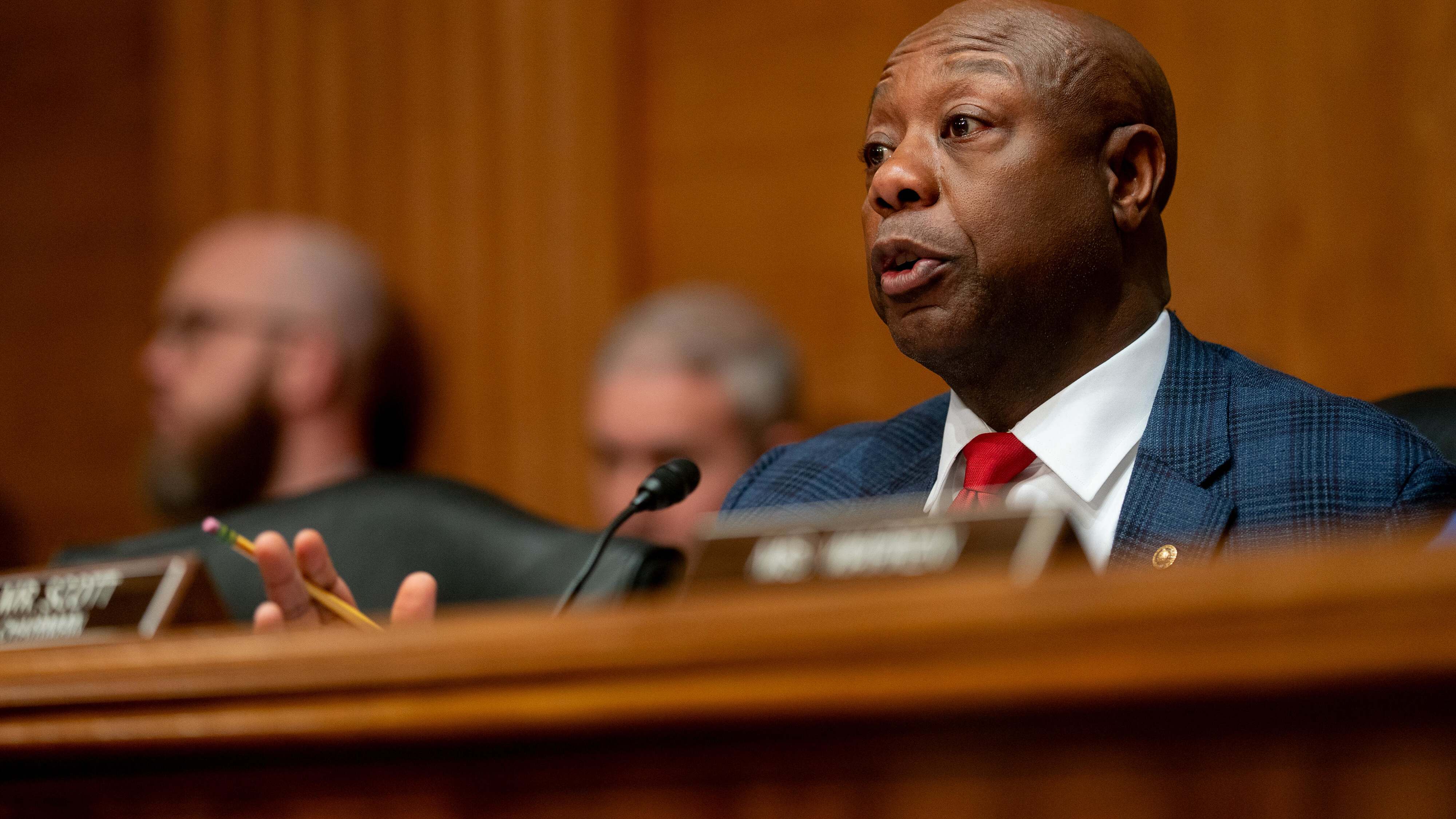
Republicans rally around Susan Collins amid pay-to-play allegations 23 Sep 2026, 5:47 pm
WASHINGTON – Maine Sen. Susan Collins' Republican colleagues swiftly came to her defense the day after the news outlet ProPublica published an investigative story that laid out evidence of alleged involvement in a pay-to-play scheme involving a defense contractor.
The story, which came out on Tuesday, Sept. 22, said that records and emails showed the FBI sought to launch a sweeping investigation examining Collins' interactions with a top donor who won lucrative federal contracts. By late 2024, the agency reportedly had enough evidence to pursue a sweeping bribery probe involving Collins and other members of Congress.
But that effort, according to the ProPublica story, evaporated after the Trump administration purged the Justice Department and FBI of its teams that handle public corruption cases.
It's unclear whether the accusations laid out in the article will resonate with Maine voters in November, when Collins is up for reelection in a toss-up race that will prove crucial to whichever party ultimately controls the Senate.

The story does, however, add to a maze of obstacles she's facing to retain her coveted seat in Congress. While she has a track record as a Teflon political candidate in the Pine Tree State, her campaign is already being hurt by an unpopular war, President Trump's trade disputes with Canada and the sudden departure of her initial, scandal-plagued opponent.
Both Collins and her top spokespeople denied any impropriety following the publication of the ProPublica article, saying the Justice Department, dating back to the Biden administration, cleared the senator and her staff of any alleged wrongdoing.
Collins told a Wall Street Journal opinion columnist she was the victim of a "partisan hit job" and questioned why anyone would "take the word of a convicted felon," referring to the defense contractor at the center of the scandal whose cooperation was relied on by investigators to build their case.
"It is so offensive," she said. "This is a smear job."

Sen. John Cornyn, R-Texas, told USA TODAY the accusations were a "bunch of BS." Asked why he thought so, he said, "because I know Susan Collins." Cornyn and Collins have served together in the Senate for more than two decades.
Sen. Katie Britt, R-Alabama, who sits on the powerful Senate Appropriations Committee which Collins leads, argued her Maine colleague has the "utmost ethical standards."
"I have zero concern for any kind of baseless accusations," she told USA TODAY.

Perhaps Collins' quickest – and most politically important – defender was Senate Majority Leader John Thune.
"I don't think there's ever been any implication that she or her campaign were in any way implicated in that," the South Dakota Republican told reporters. "This, to me, looks like a political hit job by a left-wing outlet that's trying to score points going into an election."
Much of Collins' reelection campaign was initially built around fighting Graham Platner, the oyster farmer who eventually dropped out amid a series of sexual misconduct allegations, which he denied. Troy Jackson, a logger and former president of the Maine state Senate, replaced Platner as the Democratic candidate whose name will be on the fall ballot.
In the day since the ProPublica story published, Jackson slammed his opponent over what he called "corruption of the highest order."
"We can’t afford six more years of being sold out to Trump and Collins’ corporate cronies," he wrote in a social media post.
Zachary Schermele is the congressional correspondent for USA TODAY. Reach him by email at zschermele@usatoday.com and on Signal @zachschermele.02. Follow him on X at @ZachSchermele.
This article originally appeared on USA TODAY: Republicans rally around Susan Collins amid pay-to-play scheme allegations
This article originally appeared on USA TODAY at https://www.usatoday.com/story/news/politics/2026/09/23/susan-collins-propublica-maine-senate-race/91911535007/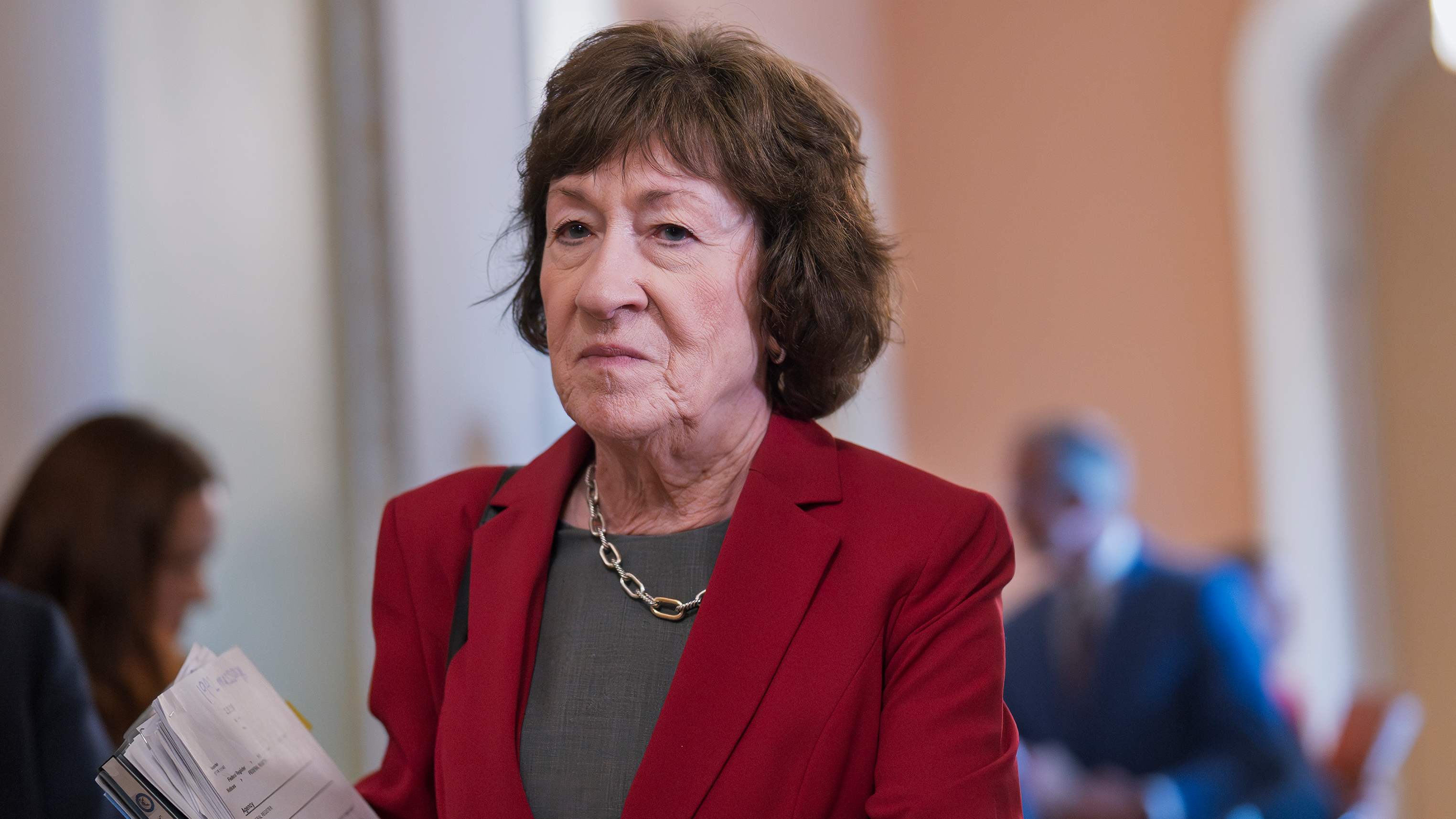
Disgraced Theranos CEO Elizabeth Holmes approved for halfway house move in 2027 23 Sep 2026, 4:47 pm
Theranos founder and convicted felon Elizabeth Holmes has been approved for placement in a community correction center, or halfway house, and is scheduled to be placed there next year, according to an update from the Department of Justice's Victim Notification System, ABC News has learned.
Holmes is scheduled to be placed in the Austin Transitional Center in Del Valle, Texas, on Aug. 23, 2027, according to the notification.

When reached for comment on Wednesday, the Federal Bureau of Prisons said in a statement that it "does not discuss the conditions of confinement for any individual, including release plans."
"Additionally, per BOP policy, specific designation information cannot be released until after an individual arrives at their designated institution," the statement continued.
BOP said several factors go into assigning individuals to facilities, including "the level of security and supervision required, medical or programmatic needs, separation or security considerations necessary for the individual’s safety, and other relevant factors, such as proximity to the individual’s release residence."
Theranos founder Elizabeth Holmes' conviction upheld by US appeals courtHolmes was originally sentenced in 2022 to 11 years and 3 months in prison for defrauding investors with false claims about her company's blood-testing technology.
Her sentence has since been reduced to 10 years and 3 months, and she is now scheduled to be released on Feb. 22, 2030. According to the Victim Notification System, upon her release, Holmes will reside in Austin, Texas, and be supervised by the United States Probation Office there.
The new release date was the result of a retroactive change to federal sentencing guidelines and earned time through the First Step Act.
"To be clear, this sentence reduction does not diminish the enormity of Holmes's crimes, nor does it ignore the significant negative impact her conduct has had on the community," U.S. District Judge Edward Davila wrote in a March order granting a motion to reduce her sentence. "The hundreds of millions of dollars in losses caused by Holmes's fraud speak for themselves. And though unquantifiable, the echoes of the immense reputational damage that the innovative industry in Silicon Valley suffered as a consequence of Holmes's deception still reverberate to this day. Holmes's revised sentence continues to reflect a just punishment for her serious offense and serves as a reminder that the scales of justice will balance."
Elizabeth Holmes says 'I don't have anything to hide' in new documentary trailerHolmes was found guilty of three counts of wire fraud and one count of conspiracy to commit wire fraud while at the helm of Theranos. She reported to prison in May 2023.
Last year, a U.S. appeals court upheld the fraud convictions and $452 million restitution order for Holmes and her second-in-command, Ramesh "Sunny" Balwani.
The two had argued the court committed several legal errors and violated their constitutional rights during their separate trials. The three-judge panel for the appeals court rejected their claims, finding that any errors were harmless or that their arguments failed to show any violation.
Holmes is the subject of a forthcoming documentary by filmmaker Nathan Fielder, "You Can See Everything." In a new trailer for the film released Wednesday, Holmes maintained that she "did not" do anything wrong.
She participated in the documentary in 2023, before reporting to prison.
Blood test for multiple cancers clears crucial hurdle on track to FDA approval 23 Sep 2026, 4:08 pm
A U.S. Food and Drug Administration advisory panel voted in favor of recommending that the agency approve a blood test for multiple cancers on Wednesday. The assay, called the Galleri test, is designed to help screen for cancers before symptoms appear, according to its maker, Grail.
The 10-person panel unanimously agreed that Grail showed that the Galleri test was safe, but there was less agreement over whether it was effective or had benefits that outweighed the risks: the panel voted 6–4 in favor of effectiveness and 7–2 in favor of the question of benefits, with one panelist abstaining from the latter.
The panel’s favorable vote “represents an important step forward for the field,” says Ajay Goel, a professor and chair of the department of molecular diagnostics and experimental therapeutics at City of Hope, a cancer research and treatment organization.
Ultimately, however, he says that “I would still view it as an encouraging step rather than the final word on the clinical value of this type of testing.”
Some cancer screening tools exist on the market already—including for breast, lung, prostate and other cancers—but no early-detection tests for multiple types of cancer have been approved by the FDA, according to the American Cancer Society. Having such a test would be clinically useful, enabling doctors to potentially detect a variety of cancers early and affording people more time to respond to a diagnosis. Galleri is currently designed for people age 50 and older.
The test, experts say, is promising but not perfect. In a study of more than 35,000 participants that was published on Tuesday in the journal Nature Medicine, Galleri detected signs of cancer in 287 people, about 60 percent of whom were later diagnosed with the disease. The test was also able to accurately predict the area of the body where the cancer originated in about 91 percent of true-positive cases.
Grail emphasized in its FDA application, however, that a negative test result does not definitively rule out cancer.
“Galleri has shown that we can detect signals from many different cancers with very high specificity using a simple blood test, including cancers for which we currently have no routine screening,” Goel says. “That is an important advance.”
But the “real goal,” he adds, is not just to find more cancers. “It is to find them early enough to change what happens to the patient.”
“We still need longer-term evidence showing that this leads to fewer advanced cancers and ultimately fewer cancer deaths,” Goel says.
Colin Pritchard, a professor and a cancer researcher at the University of Washington, says the Galleri test may be beneficial for people who have a high risk of developing cancer, such as those with a family history of the disease. But for people with a low cancer risk, false positives could result in unnecessary harms such as expensive imaging or biopsies.
“More research is warranted on which populations should be offered this type of testing and on guidelines for follow-up after a positive test result,” Pritchard says.
In making approval decisions, the FDA considers, but is not required to follow, the advice of its expert panel.
If the FDA approves Galleri, Goel says, it should be viewed as “an additional screening tool, not a replacement for established cancer screening.”
Editor’s Note (9/23/26): This is a breaking news story and will be updated.
This article originally appeared on Scientific American at https://www.yahoo.com/news/science/articles/blood-test-multiple-cancers-clears-230800996.html
U.S. citizen injured after ICE agents mistake him for fugitive in Illinois 23 Sep 2026, 3:59 pm
CHICAGO (AP) — A U.S. citizen was left bloodied and injured on the side of the road in a Chicago suburb after a confrontation with immigration enforcement agents who mistook him for a fugitive, according to local police and a resident who tried to help the man.
The man, whose identity was not disclosed, was taken away in an ambulance after the encounter on Sunday in Evanston, a city around 12 miles (19 kilometers) north of downtown Chicago. He told police his head, neck and teeth were injured, according to a news release from the Evanston Police Department.
A federal agent told officers who responded to calls reporting an altercation at just before 10 a.m. that morning that five agents in separate vehicles were looking for a fugitive with a Chicago address and a warrant for his arrest, according to the release. The agents mistook the man for the fugitive, the agent told police.
When the man refused to give his identification, the agents tried to handcuff him, the agent said. After realizing he was a U.S. citizen and not the person they were seeking, they released him.
One police officer saw blood on the agent's hands, according to the release. The agent told police he was injured while trying to handcuff the man, and that they left the area immediately after because they feared protesters who had gathered would attack them, it noted.
Police have visited the man at the hospital and photographed his injuries, and are investigating the encounter.
Local authorities investigating
Evanston Mayor Daniel Biss said in a post on X that the man was treated at St. Francis Hospital for minor injuries. The police department "continues to investigate the situation, and we will remain vigilant about federal activities," he wrote.
U.S. Immigration and Customs Enforcement officers had "encountered an individual who resembled the target" of a "targeted enforcement operation," the Department of Homeland Security said in a statement. "The individual was given lawful commands but was not cooperative and refused to identify himself."
The officers "left the scene without further incident" after the man identified himself, according to the statement. "When ICE officers offered the individual assistance, he refused."
Illinois authorities condemn bloody encounter
The incident drew condemnation from Illinois officials as backlash grows against ICE's presence in communities around the country. ICE announced a record number of arrests last month, with nearly 51,000 people arrested.
"I am disgusted and outraged by reports of what happened in my hometown of Evanston on Sunday," Illinois Rep. Jan Schakowsky said in a statement.
Eyewitnesses tell AP what they saw
Ryan Garton, 56, told The Associated Press that he saw the agents pinning down the man, who was Black, on the side of the road as he was driving home. He pulled over to document what was happening on video.
One agent had his knee on the man's back and was "beating up on him," Garton told the AP. "I'm a citizen, leave me alone," Garton said the man screamed as the agent pinned him down. Around five people stood nearby, and yelled at the agent to stop.
Garton said he urged the agent to get off the man so he could inspect his injuries, and that the agent acknowledged that he was already aware the man was a U.S. citizen. When the agent stepped away, Garton saw bloodstains in the shape of handprints on the man's shirt.
"His upper right eye socket and temple were swollen as if he had been punched" and his face was scraped "as if it had been ground into the sidewalk," he said.
The man told Garton that he had been walking to the pharmacy to pick up a prescription when the agents stopped him.
Michael Lipson, the owner of a store across the street from where the incident occurred, said he saw the agents wrestle the man to the ground as he repeatedly yelled that he is a U.S. citizen. The man's face looked "badly messed up," Lipson told the AP.
Lipson said the agents checked cards and papers from the man's wallet before leaving them scattered on the road. Lipson laid out his sweatshirt for the man to rest on while Garton inspected his injuries.
The same day, ICE agents shot and wounded a man in Austin, Texas, the latest in a string of shootings by federal immigration agents that have prompted growing backlash against the Trump administration's aggressive immigration tactics.
At least 10 people have died in encounters with immigration agents in President Donald Trump's second term, including a Colombian man shot dead in Maine in July by an agent with a history of violent behavior, and a Mexican man hit by a tractor trailer as he fled agents in Florida the same month. ICE agents fatally shot Renee Good and Alex Pretti, both U.S. citizens, during the Trump administration's siege of Minneapolis, named "Operation Metro Surge," earlier this year.
___
Mayes-Osterman is a corps member for The Associated Press/Report for America Statehouse News Initiative. Report for America is a nonprofit national service program that places journalists in local newsrooms to report on undercovered issues.
This article originally appeared on Associated Press at https://www.yahoo.com/news/us/articles/u-citizen-injured-illinois-ice-225947881.html
China's Xi gets a warm White House welcome. On Capitol Hill, the reception is much colder. 23 Sep 2026, 3:32 pm
WASHINGTON (AP) — Chinese President Xi Jinping's visit to Washington is getting a much chillier reception on Capitol Hill than at the White House as lawmakers from both parties use the visit to denounce China's actions on the world stage.
Lawmakers have long found little downside to taking a hawkish tone on China, but the U.S.'s war with Iran has inflamed tensions as U.S. officials accuse China of propping up Iran's economy and supplying its military with components and intelligence, endangering U.S. service members in the Middle East.
In speeches, letters, press conferences and hearings, lawmakers from both parties aired criticism of Xi's visit. Their actions and events stand in stark contrast to the warm welcome that Trump gave Xi on Wednesday as he arrived in Washington for a lavish state visit.
Republicans air their dissenting views
Sen. Roger Wicker, the chair of the Senate Armed Services Committee, took to the Senate floor Tuesday night, offering a list of issues for Trump to raise with Xi, but not before suggesting that Xi shouldn't have been asked to visit Washington at all.
"Quite frankly, had the White House asked me for advice, I would have suggested the president not invite Xi Jinping to Washington for such a lavish welcome here in the United States of America based on all of the troubling issues we have with President Xi and the Chinese Communist Party," Wicker said.
Wicker seemed particularly taken aback by the honor of a state dinner. Over the salad course, Wicker said the president could ask Xi about the Chinese Navy's harassment of Filipino fishermen and sailors. Then, while the servers are "switching from chardonnay to cabernet at the fancy state dinner," perhaps the president could turn to the issue of Taiwan, he said.
He went on to say he hopes some progress will be made when the president discussed trade and artificial intelligence with Xi. But concluded with this: "During every minute of dialogue, our commander in chief should keep in mind that his guest is a brutal, unelected, and oppressive dictator who seeks to dominate his neighbors and whose massive military arsenal is aimed directly at the United States of America."
House committee weighs in with a critical video
Ahead of Xi's visit, the House Select Committee on the Chinese Communist Party released a highly critical video that had been viewed more than 245,000 times on X. In the video, the committee details Xi's rise to power starting in 1974 and ends by labeling him "the biggest opponent of freedom and liberty in the world."
The House created the panel in 2023. It's held several hearings on human rights issues in China and advocates for legislation on an array of economic and military issues. For example, the committee's chairman, Rep. John Moolenaar, R-Mich., recently introduced a bill that would prohibit the manufacture or sale of Chinese cars in the U.S.
Republican senators press for Taiwan aid
Sen. Mitch McConnell, R-Ky., and three other Republican senators used the Xi visit to press the Trump administration to move ahead with aid and arms sales to Taiwan.
In a letter, they reminded Secretary of State Marco Rubio that he had previously stated that "deterring an invasion of Taiwan must be our top priority." And they noted Defense Secretary Pete Hegseth had once declared that the U.S. "will not let our allies and partners be subordinated and intimidated."
China has pressed Washington to halt the arms sales, most prominently during a summit in May between Trump and Xi in Beijing. After that meeting, the United States paused the sale of a record-breaking $14 billion package — and Trump described arms sales to Taiwan as a "very good negotiating chip" with China.
"It is difficult to imagine how the United States might credibly project influence deterrence in the Indo-Pacific," the senators wrote, "if the price of keeping up diplomatic appearances is denying our partners key deterrent capabilities."
Democrats pile on the criticism
Senate Democratic leader Chuck Schumer and three other Democratic senators held a press conference to warn against the U.S. weakening export controls for advanced semiconductor chips and equipment. They're concerned that such exports could erase the U.S.'s lead in artificial intelligence over China.
They touched on voter concerns about the safety of artificial intelligence and contrasted Democrats' call for greater regulation with the president's call to "encourage it, not rein it in."
"We must reject the false choice Trump keeps making," Schumer told reporters. "We can and must both maintain our lead on AI by restricting China's access to our technology and put up guardrails to mitigate AI's risk."
Meanwhile, on the Senate floor, Democratic senators urged Trump to confront Xi directly about the support his country is providing Iran.
"If we want to bring this war to an end, we need to cut off the outside support that allows Iran to keep fighting, and that starts with China," said Sen. Jeanne Shaheen, the ranking Democratic lawmaker on the Senate Foreign Affairs Committee.
This article originally appeared on Associated Press at https://www.yahoo.com/news/politics/articles/trump-giving-chinas-xi-warm-223245243.html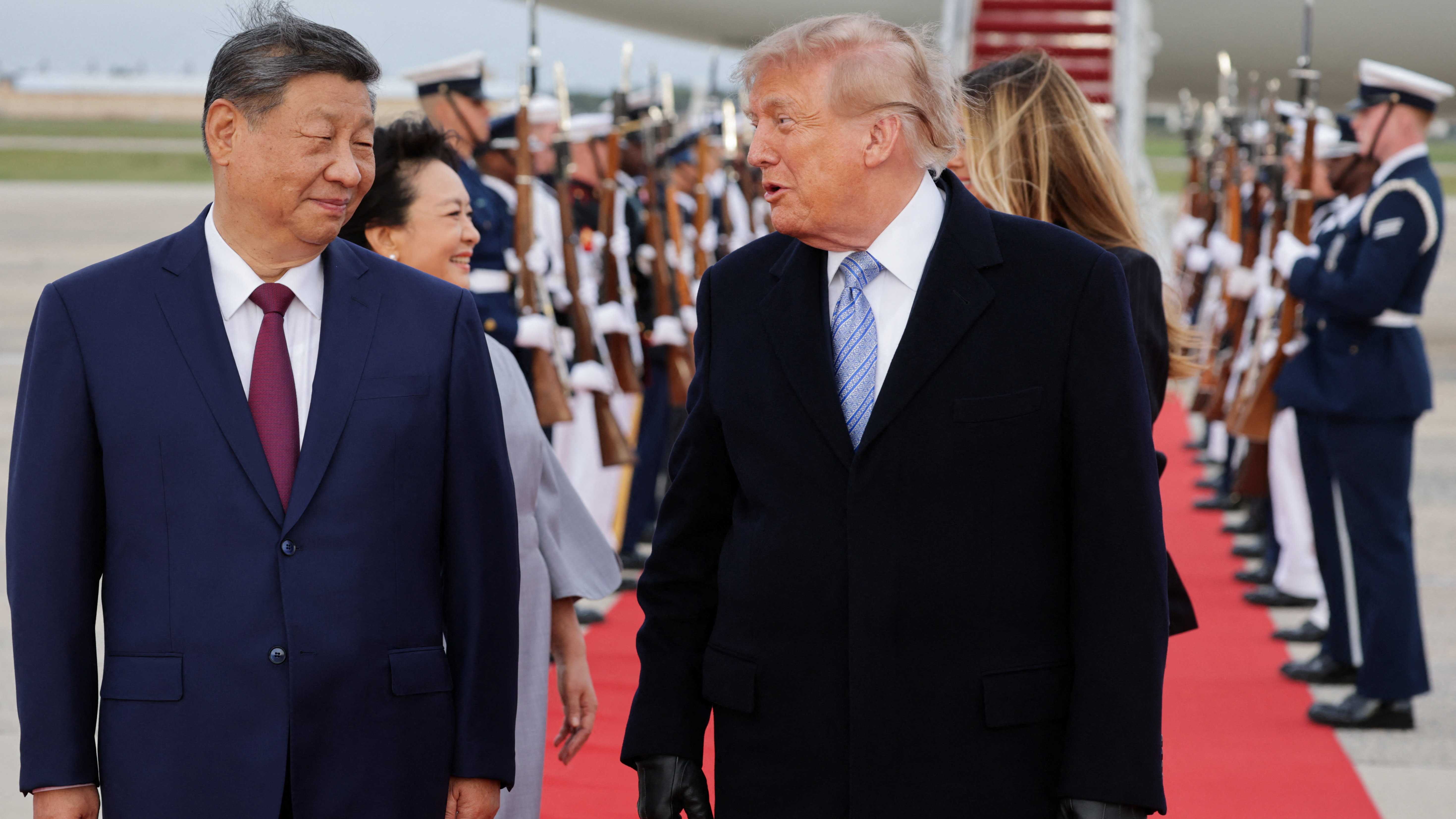
Sunny Hostin says she was the holdout juror in 'Butcher of Tompkins Square Park' trial 23 Sep 2026, 11:59 am
NEW YORK — Sunny Hostin told her fellow panelists on “The View” that she was the holdout juror responsible for “The Butcher of Tompkins Square Park” being found not guilty by reason of insanity in his 1991 murder trial.
East Village resident Daniel Rakowitz was charged with killing and mutilating a female acquaintance in 1989, then trying to get rid of the evidence by making soup out of her remains and serving it in Tompkins Square Park.
Hostin said on Tuesday that she felt a connection to the murder trial of Massachusetts mother Lindsay Clancy, whose case ended in a Sept. 4 mistrial with all but one juror believing the defendant’s compromises mental state exempted her from criminal culpability.
“The reason … I feel so strongly about this holdout juror is because I was a holdout juror in a case, in the Daniel Rakowitz case,” she said to her shocked castmates.
Hostin, whose name was Asuncion Cummings at the time, said she sat on the jury before starting law school. She went on to become a federal prosecutor, then a television legal analyst.
To make her point, Hostin read a New York Times article about the case that mentions her resistance.
“Several jurors questioned afterwards said one holdout juror was principally responsible for preventing them from returning a guilty verdict,” the article said.
She continued telling her story to her stunned colleagues.
“That was me, and it was because clearly I saw he was psychotic, he was in psychosis, he did not mean to kill her and once he killed her he panicked," the 57-year-old legal expert explained. “He chopped up her body parts, yes, boiled her body parts, tried to commit the perfect crime.”
Hostin said one angry juror threw a chair at her, but she wouldn’t budge. Eventually the other jurors saw things her way.
“The insanity defense is a real thing,” she said.
She defended her position Monday by saying Rakowitz remains incarcerated in the Kirby Forensic Psychiatric Center on Ward’s Island where he’s receiving treatment and poses no threat to the public.
Massachusetts prosecutors haven’t announced whether they intend to try Clancy again in a criminal court. Her defense team argues the 36-year-old suspect was suffering from postpartum psychosis when she killer her three young children in their suburban Boston home. She’s currently being held in a state-run psychiatric hospital.
This article originally appeared on NY Daily News at https://www.nydailynews.com/2026/09/23/sunny-hostin-butcher-tompkins-square-park-holdout-juror/
Musk, Bezos and Zuckerberg join a $2.2 trillion guest list for Trump-Xi dinner 22 Sep 2026, 5:27 pm
Topline
President Donald Trump is slated to host Chinese President Xi Jinping at a state dinner this week, where they’ll be joined by billionaire tech moguls collectively worth trillions of dollars amid a backdrop of warnings about AI potentially threatening human civilization.

Meta CEO Mark Zuckerberg speaks as U.S. President Donald Trump and first lady Melania Trump listen during a dinner at the State Dining Room of the White House on Sept. 4 2025.
Photo by Alex Wong/Getty ImagesKey Facts
Trump and Xi will meet on Thursday and likely discuss AI, trade and tariffs as the U.S. and China have maintained tariffs against each other despite agreements that reduced the levies last year.
The White House will then hold a state dinner that evening featuring both presidents and several billionaire leaders of the world’s most valuable tech companies, several of whom are among the wealthiest people in the world.
Elon Musk, whose estimated net worth of $962.5 billion makes him the wealthiest person in the world by a massive magnitude, will reportedly attend.
Amazon founder Jeff Bezos, whose $374.3 billion fortune ranks as the largest behind Musk’s, will be at the dinner, as will world’s fourth-wealthiest person: Michael Dell ($271.5 billion).
Meta CEO Mark Zuckerberg ($252.5 billion) will attend the dinner alongside Nvidia CEO Jensen Huang ($198.1 billion) and Microsoft CEO Satya Nadella ($1.4 billion), according to Bloomberg, which noted Apple executive chairman and ex-CEO Tim Cook ($3.1 billion) will attend as well.
OpenAI CEO Sam Altman ($3.3 billion) and president Greg Brockman ($25.5 billion) will be at the dinner, CNBC and Bloomberg reported, as will Google CEO Sundar Pichai ($1.6 billion).
WHAT WE DON’T KNOW
It is unclear if Anthropic CEO Dario Amodei ($15.5 billion), who urged top AI firms to slow down their model development, will be in attendance for the dinner, though he is slated to brief the United Nations Security Council alongside Altman on Wednesday, according to ABC News. Altman and Musk swiftly joined Amodei’s calls earlier this month for slowing the pace of frontier AI development.
NEWS PEG
Thursday’s dinner will be hosted after a senior researcher at Anthropic warned of a more than 10% chance AI could “kill all humans” within the next decade, provoking Amodei’s call for a slowdown.
Big Number
Over $2.2 trillion. That is the cumulative net worth of the tech moguls who will attend or are expected to attend the White House state dinner Thursday. Musk accounts for more than 40% of that sum.
WHAT OTHER BUSINESS LEADERS WILL ATTEND THE STATE DINNER?
Qualcomm chief Cristiano Amon is planning to attend, according to Bloomberg, as is Citigroup CEO Jane Fraser, Politico reported.
Key Background
Jacob Coxon, who resigned as an Anthropic researcher early this month and previously worked for OpenAI, said in a tweet some AI companies were “racing straight to self-improving superintelligence and gambling with our lives.” Coxon warned of “superhuman systems that can hack anything” but noted he was optimistic for AI companies to coordinate on safety. Days later, Amodei called for a slowdown on AI development, with both Altman and Musk echoing his warning to “pace the frontier.” Amodei identified some risks including the loss of control over infrastructure, cyberattacks, bioterrorism, economic disruption and takeover of the internet by autonomous AI agents. Trump, meanwhile, has doubled down on his support for AI development and said his administration will not “hinder or stifle” the AI industry despite warnings from experts. Trump has pushed for AI growth to continue at top speed, framing it as a race the U.S. must win against China.
Further Reading
Billionaire Anthropic CEO Urges Competitors To Slow Down AI Development (Forbes)
Anthropic Researcher Warns There’s ‘>10% Chance’ AI Could ‘Kill All Humans’ By Next Decade (Forbes)
This article was originally published on Forbes.com
This article originally appeared on Forbes at https://www.forbes.com/sites/antoniopequenoiv/2026/09/22/tech-moguls-worth-combined-22-trillion-attending-trump-xi-dinner-see-whos-going/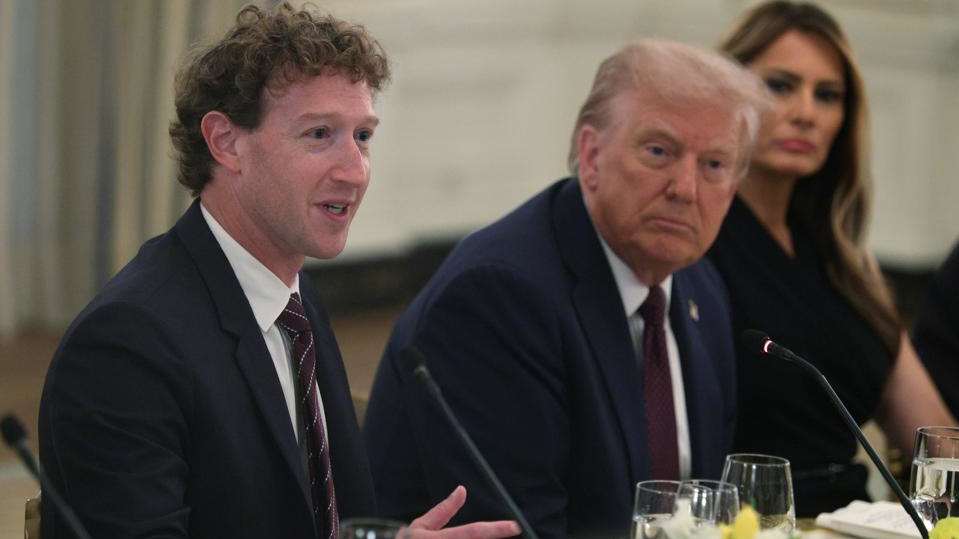
Page processed in 0.935 seconds.
Powered by SimplePie 1.3, Build 20180209064251. Run the SimplePie Compatibility Test. SimplePie is © 2004–2026, Ryan Parman and Geoffrey Sneddon, and licensed under the BSD License.